WalterPicks
Project Overview
Problem Space
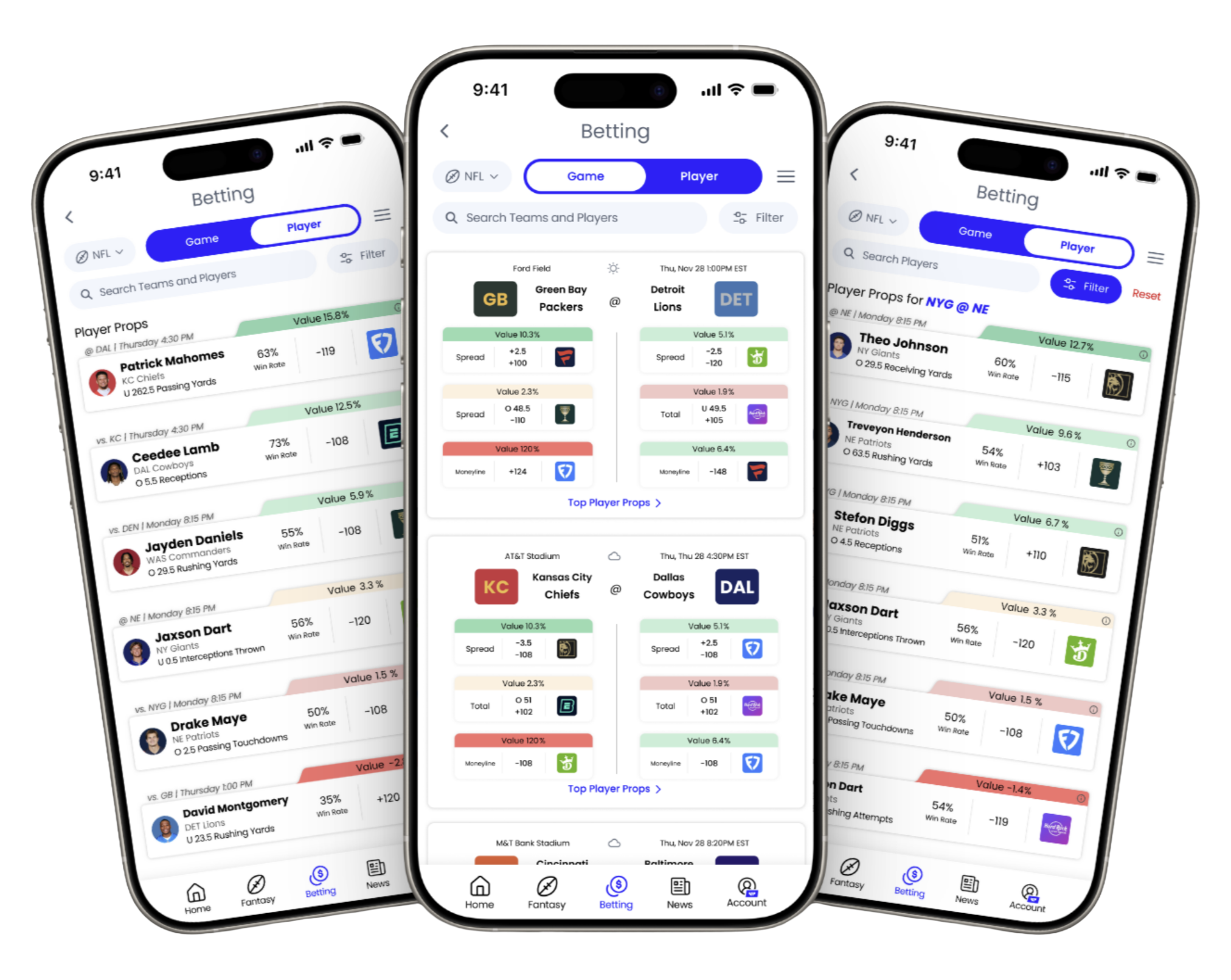
WalterPicks is a personalized sports betting app powered by AI-leveraged projections & insights to guide fantasy & sports betting decisions
The current design of the Walter Picks app lacks clarity in its core features, namely the Player Prop Evaluator (PPE), and Game Betting screens
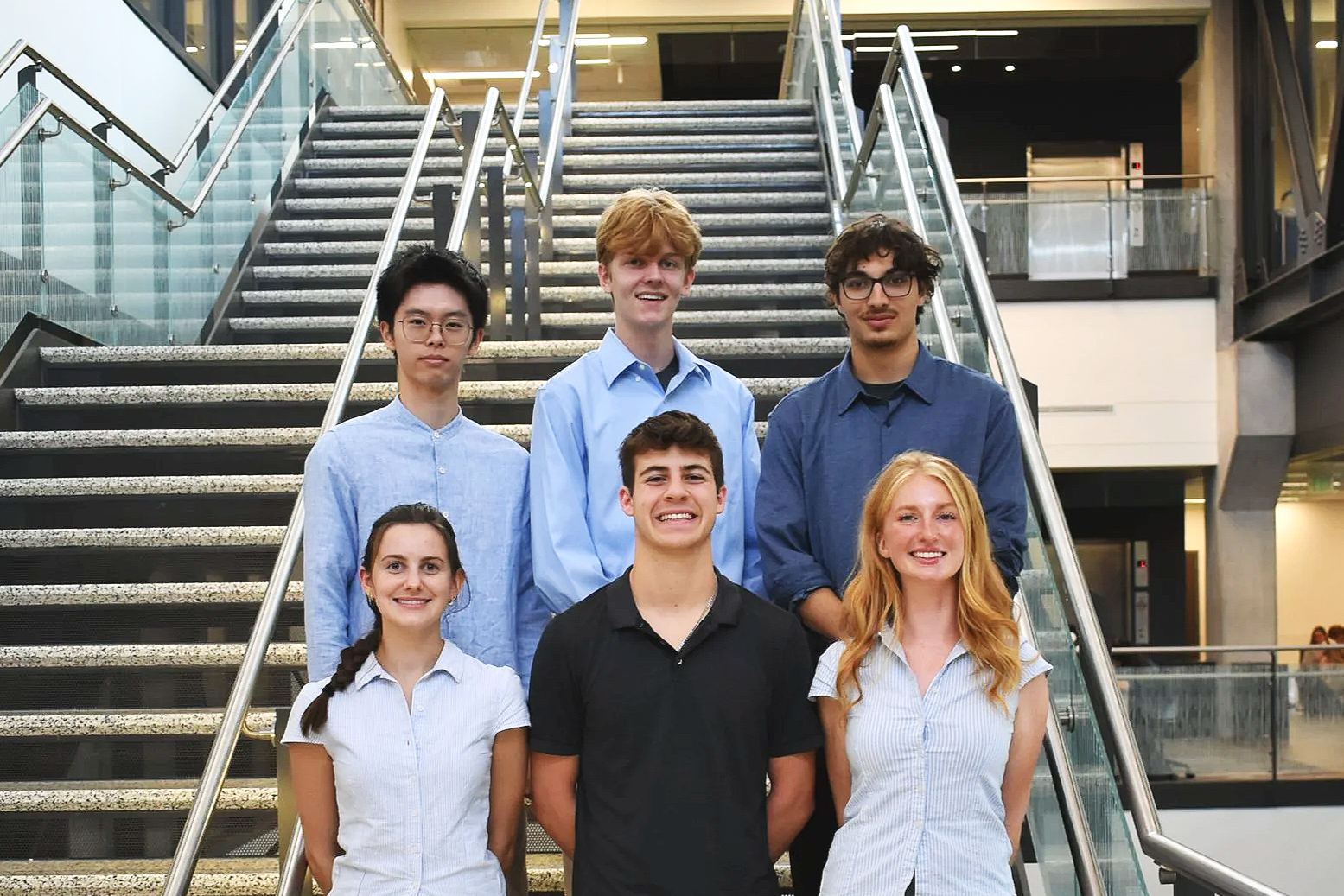
Meet The Team
Anderson Tsan
Aziz Klimasewiski
Carter Colatrella
Ethan Basham
Maddie Nikolai
Stephanie Deuschle
Aug 2025 - Dec 2025
Goals
01
02
Redesign the UI of the Game Betting & PPE screens to ensure intuitive comprehension for our user group (sports fans 18+)
Integrate the two betting features to allow users to navigate with ease without having to jump between disjointed screens
The Process
Gaining Familiarity With the User Group
Risk Perception
Literature
Review
Method 7 peer review articles touching on the psychology of sports betting & betting practices
Betting Philosophy

Loss Aversion
Internalized Success
Method Conduct structured vocal interviews with 6 selected participants from an interest form
01
Sports Betting Experience
9 months - 4 years of experience
Avg experience of 2.35 years
Primary focus on football
02
Preliminary User Interviews
Motivations

Social Status
Social Connection
Profit
Dopamine Reinforcement
6 Males, Ages 19-50
Platform Experience
Preference for intuitive UI & easy navigation
Liking of promotion deals incentives
FanDuel majority usage
03
Decision Making
Utilization of previous knowledge & intuition
Liking for win percentage
Display of hindsight & confirmation bias
App Store
Reviews
Comparative
Analysis
Contextualizing our Scope
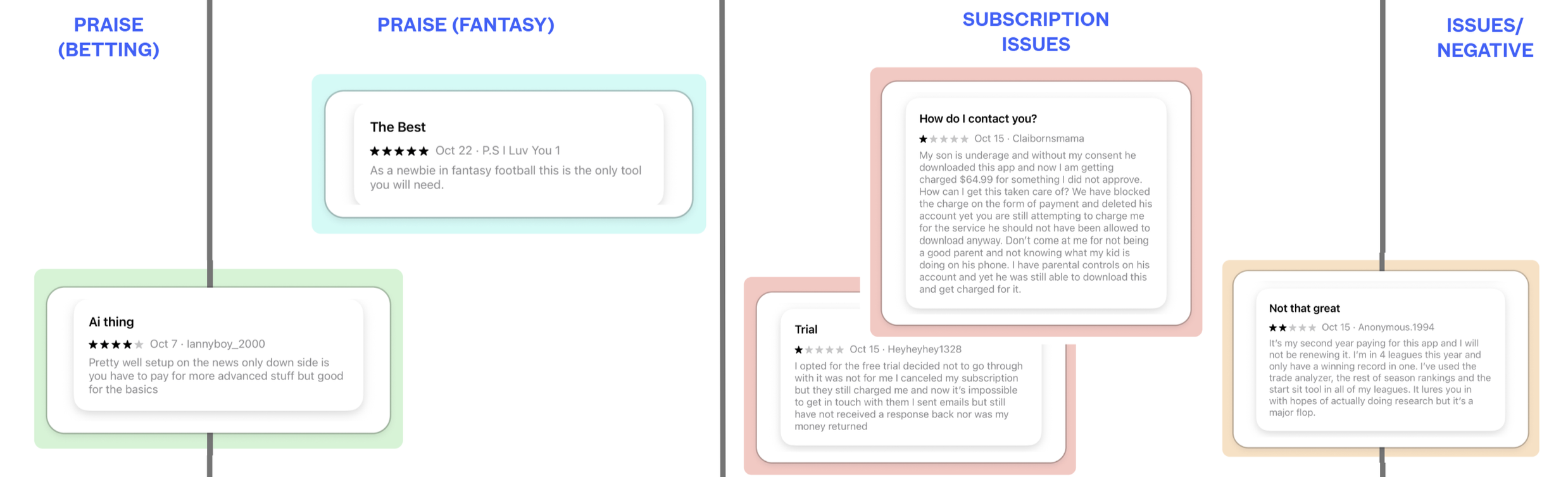
Method Gather feedback from the twenty-five most recent reviews on WP on the App Store, identifying specific user pain points
Method Comparative research on similar leading apps within the sports betting realm to discover highlighting features to help inform our design choices for WalterPicks


Design Takeaways
User Friendliness for Novice Users
Display of Short, Concise Information
Small Icons > Text
Customizable Win Outcomes
Visual Aid of Team/Player Logo Next to Name
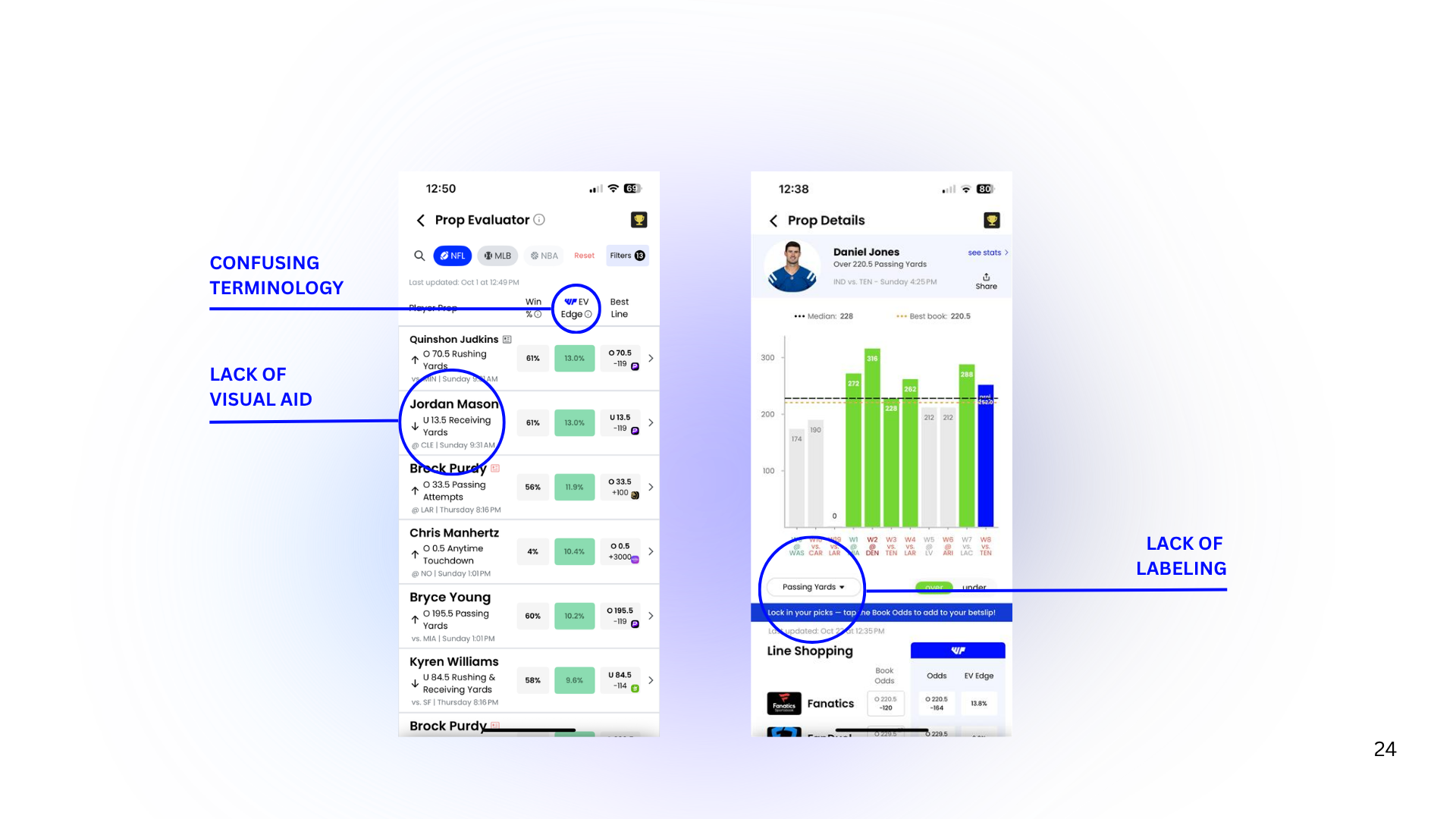
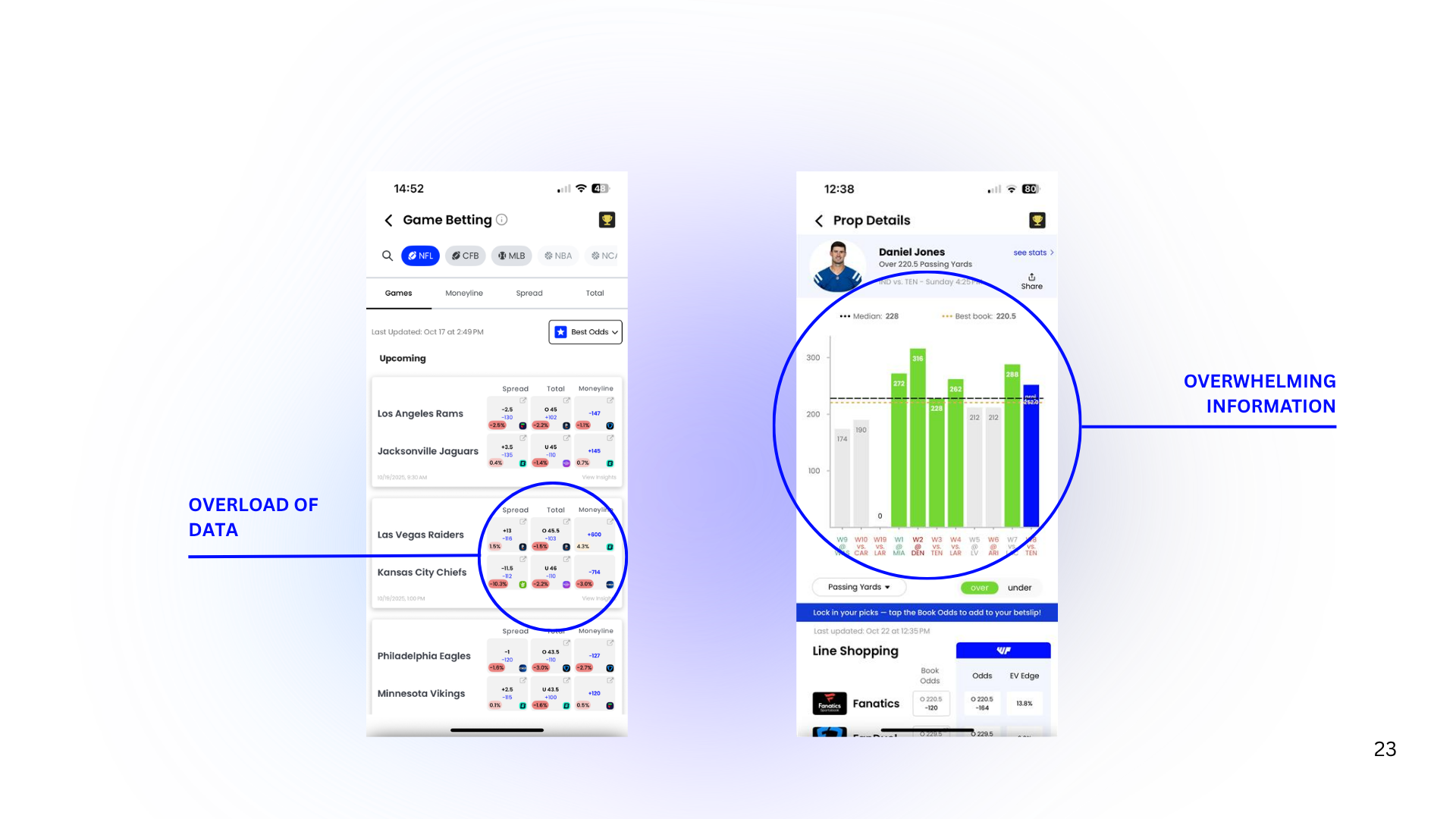
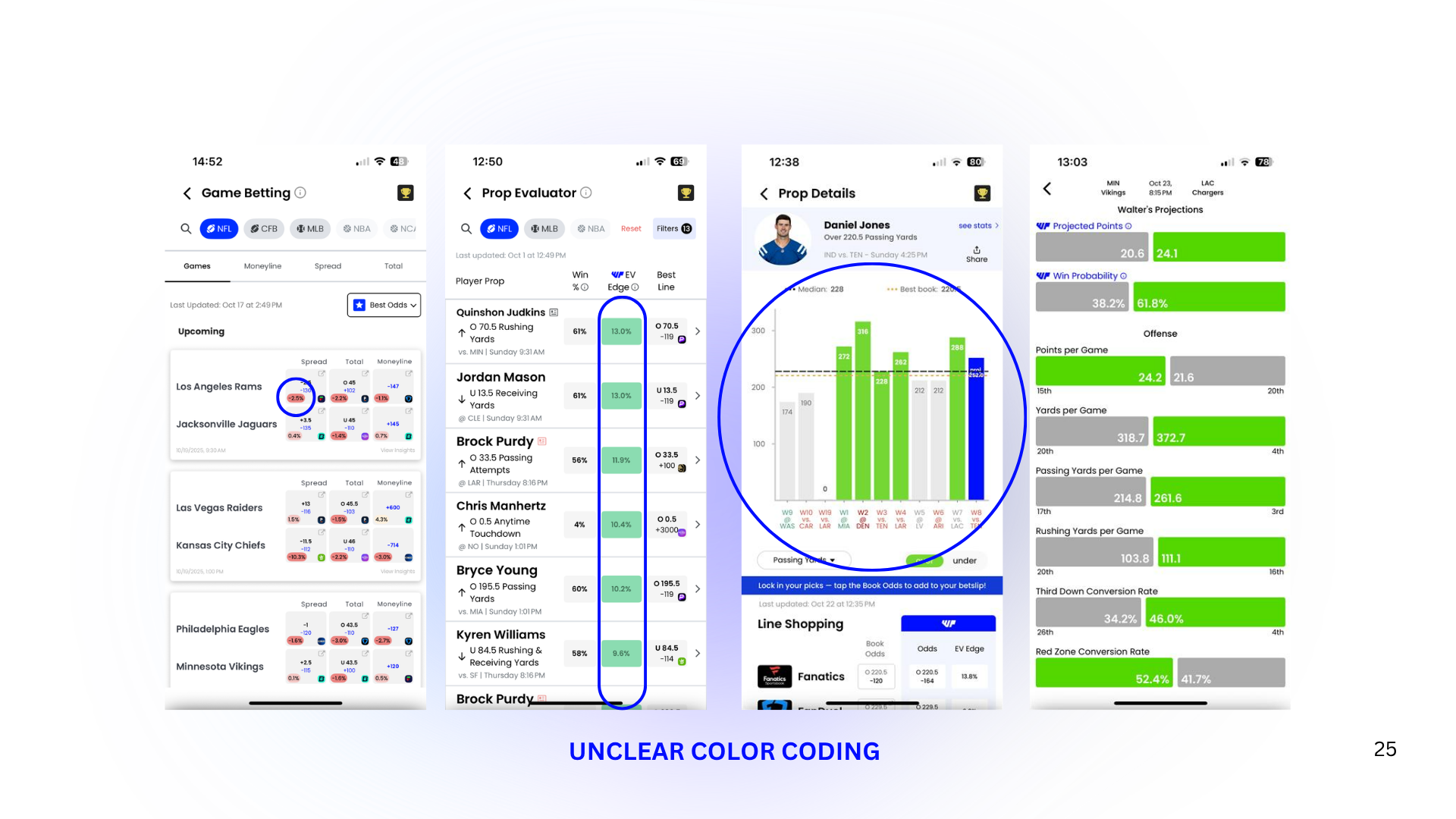
Locating User Pain Points & Usability Issues Within App Navigation
Methods Current State Usability Testing & Information Architecture Mapping Navigation
Developing WalterPicks’ Ideal Personas
Methods Concentrated structured interviews with 8 WalterPicks users along with a ranking activity to locate user priorities when placing a bet
Interview Takeaways
Intuition —> Risk Taking
Data Driven —> Risk Avoidant/Tolerant
Enjoyment > Profit
Motivated by Success > Loss
Ranking Takeaways
Majority Bets on Game AND Players
Weather factor
Utilization of Multiple Betting/Insight Platforms
Concentration on Past Performance
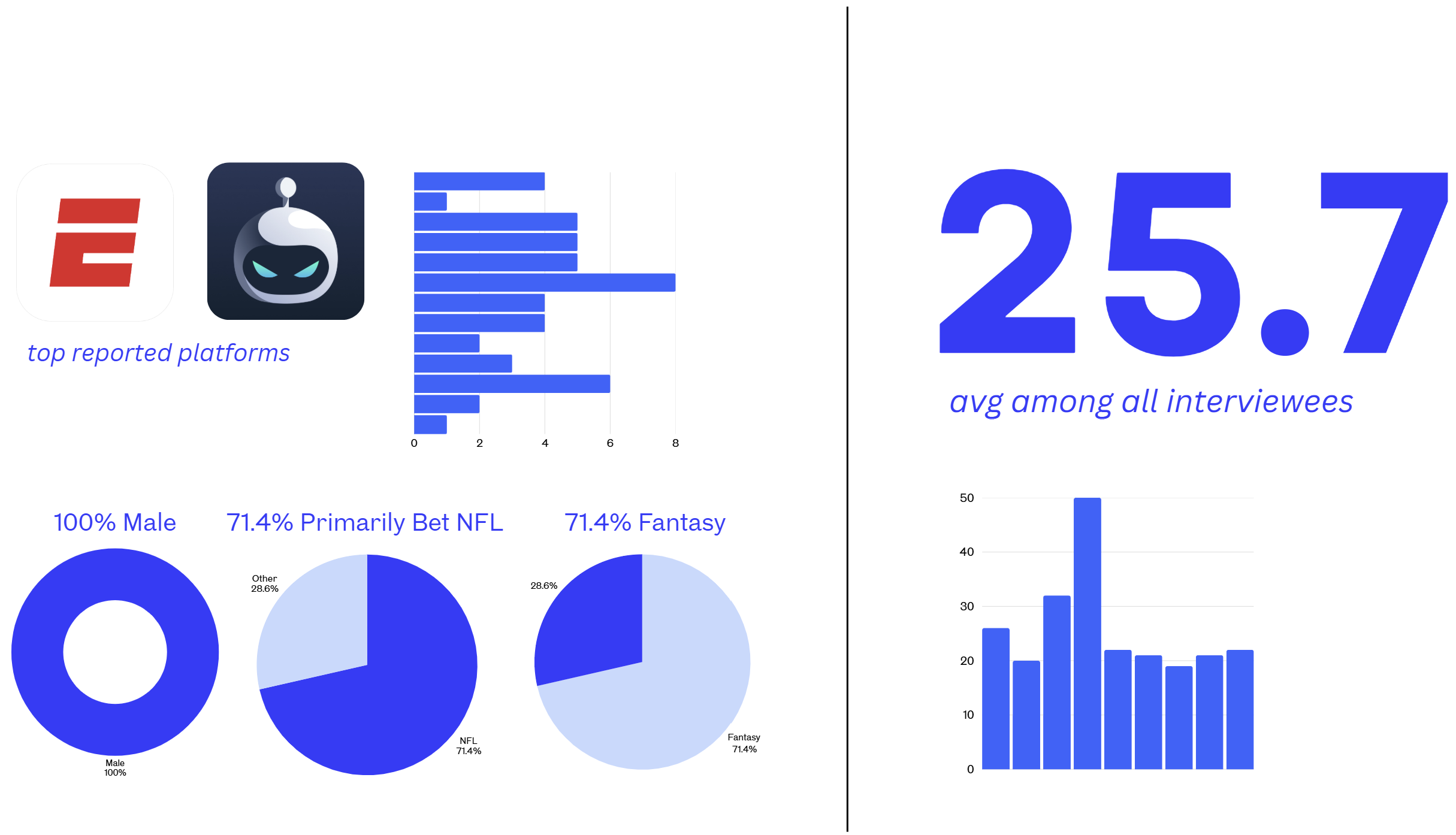
Number of Reported Sportsbooks/Platforms
Age
WalterPicks’
Final Personas
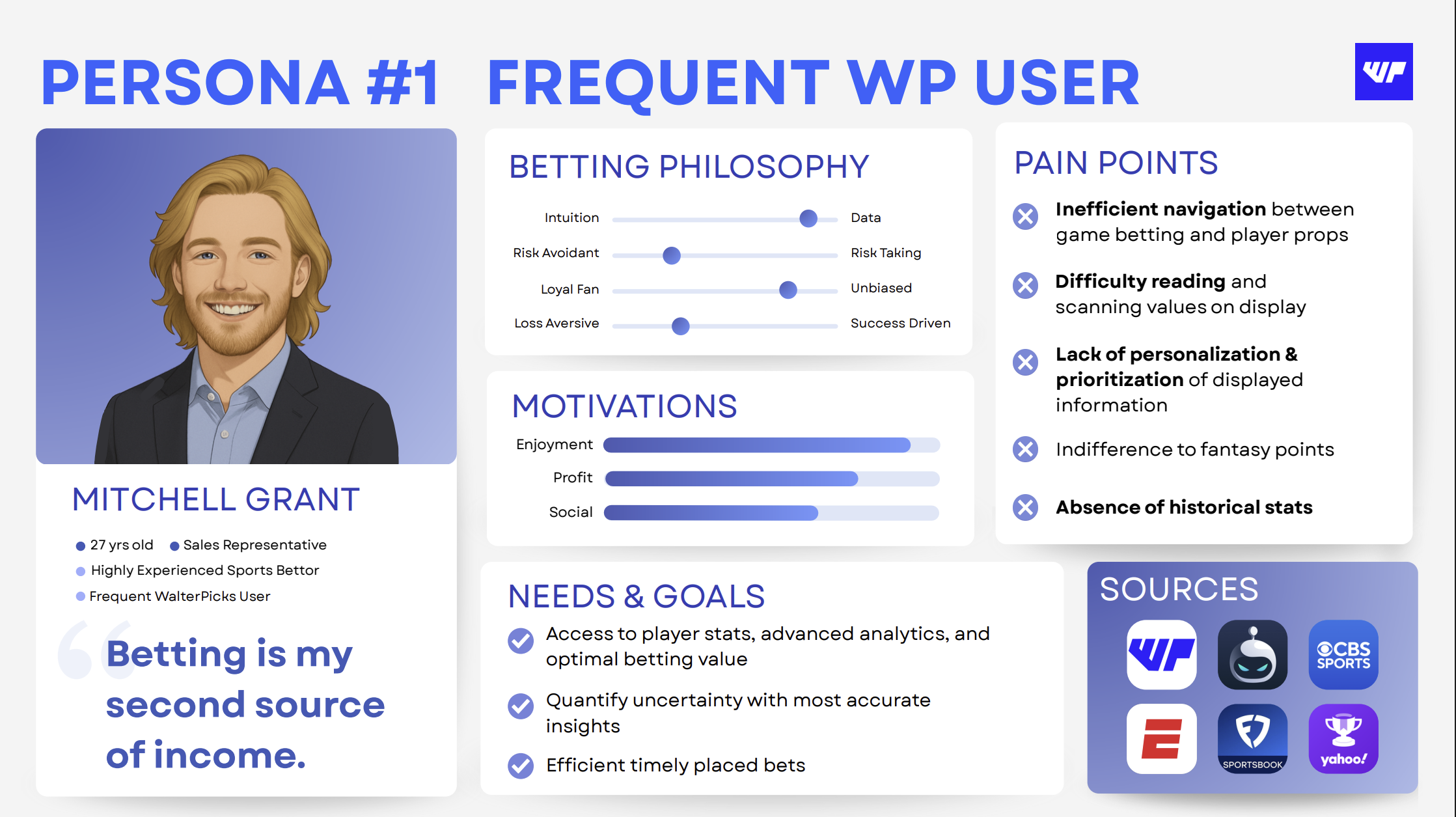
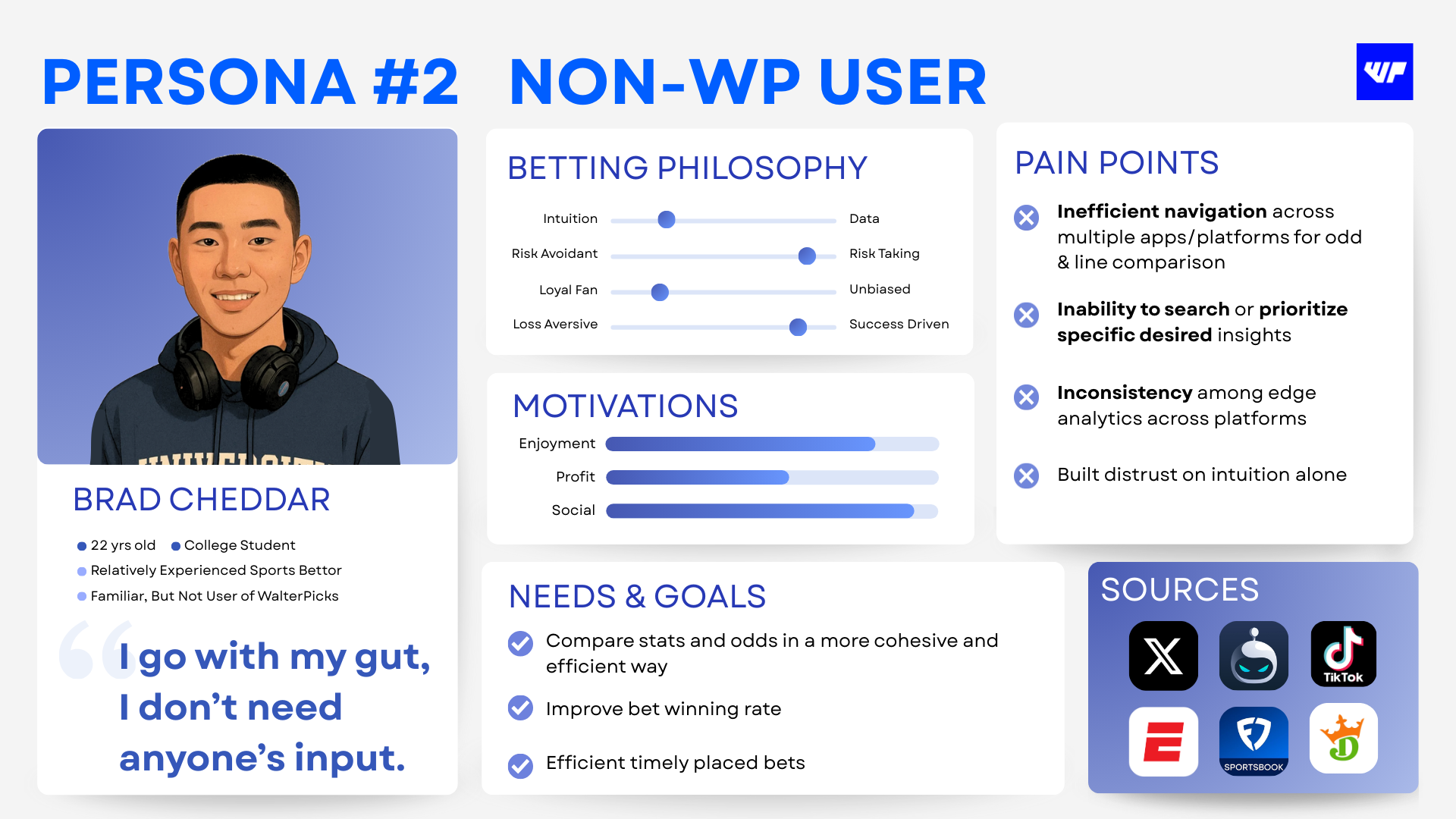
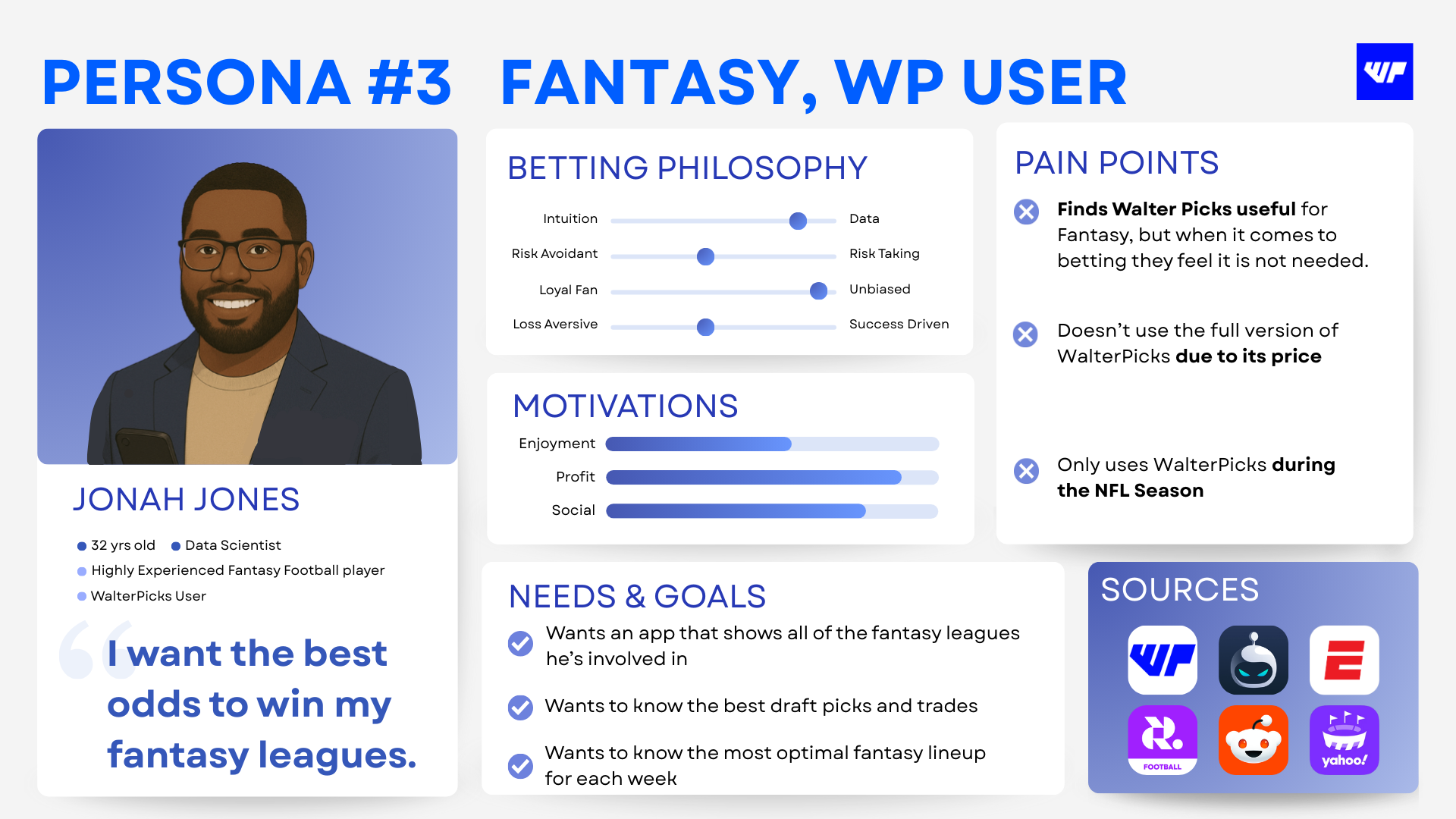
Translating Compiled Pain Points & Goals Into
Iterative Solutions
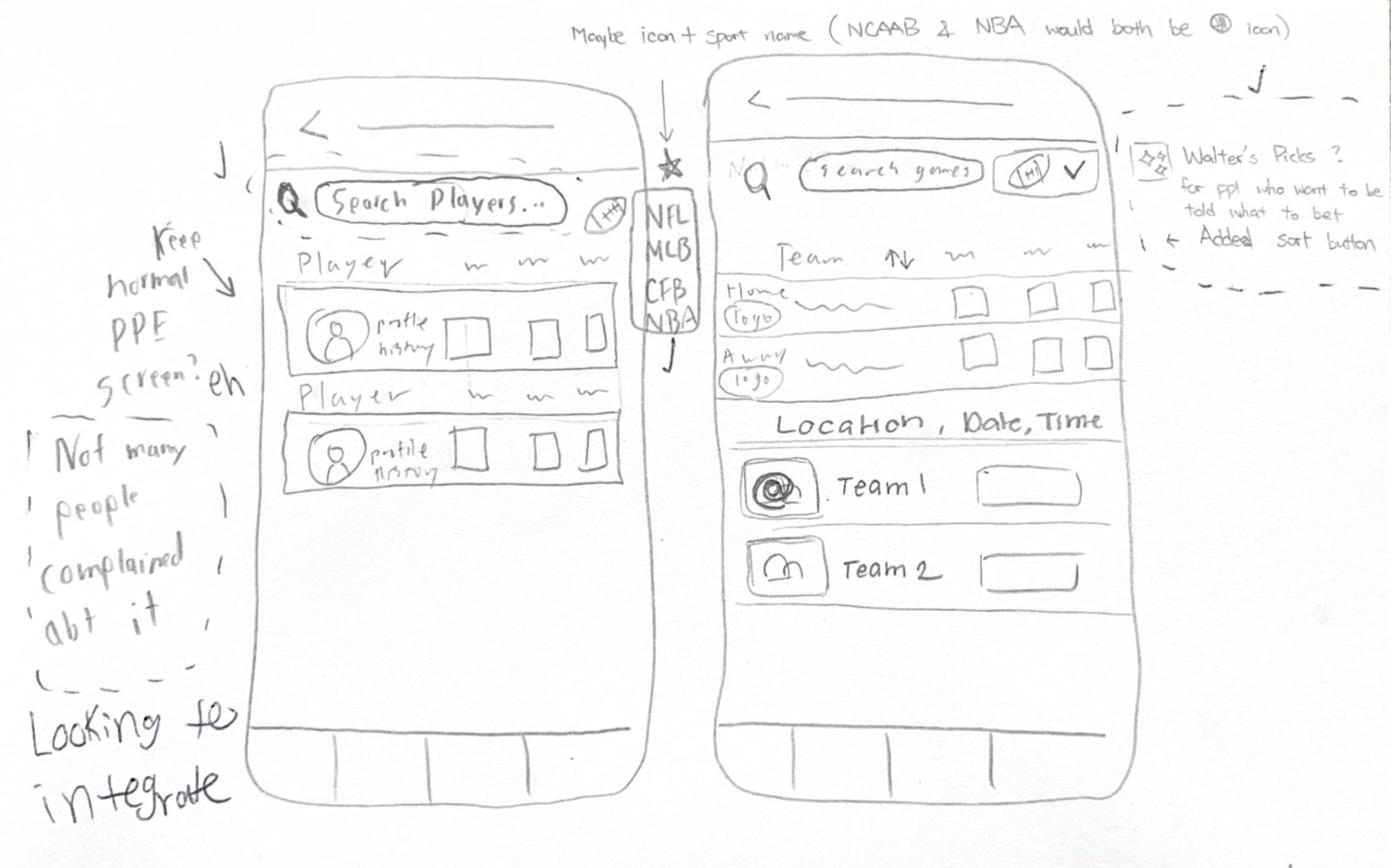
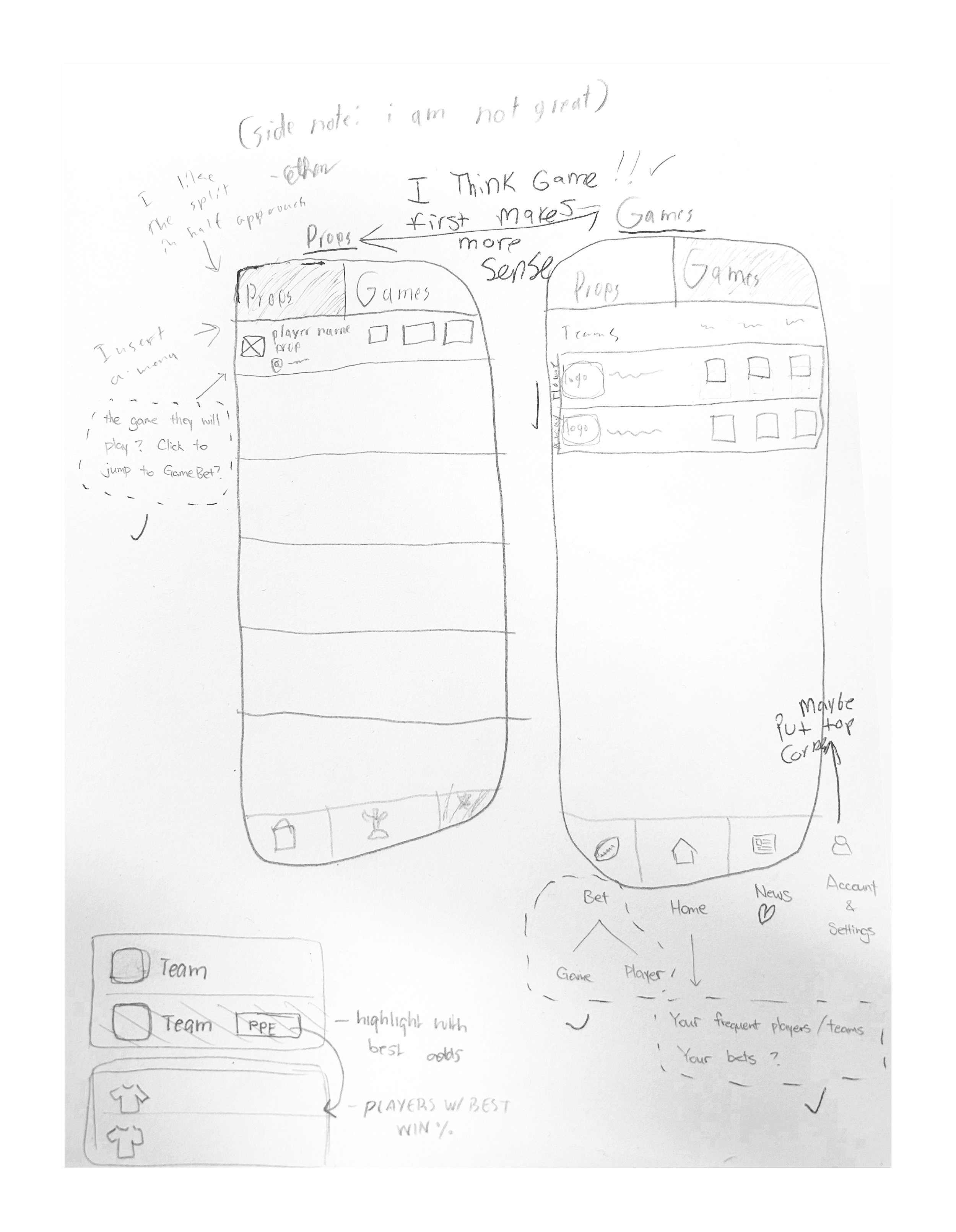
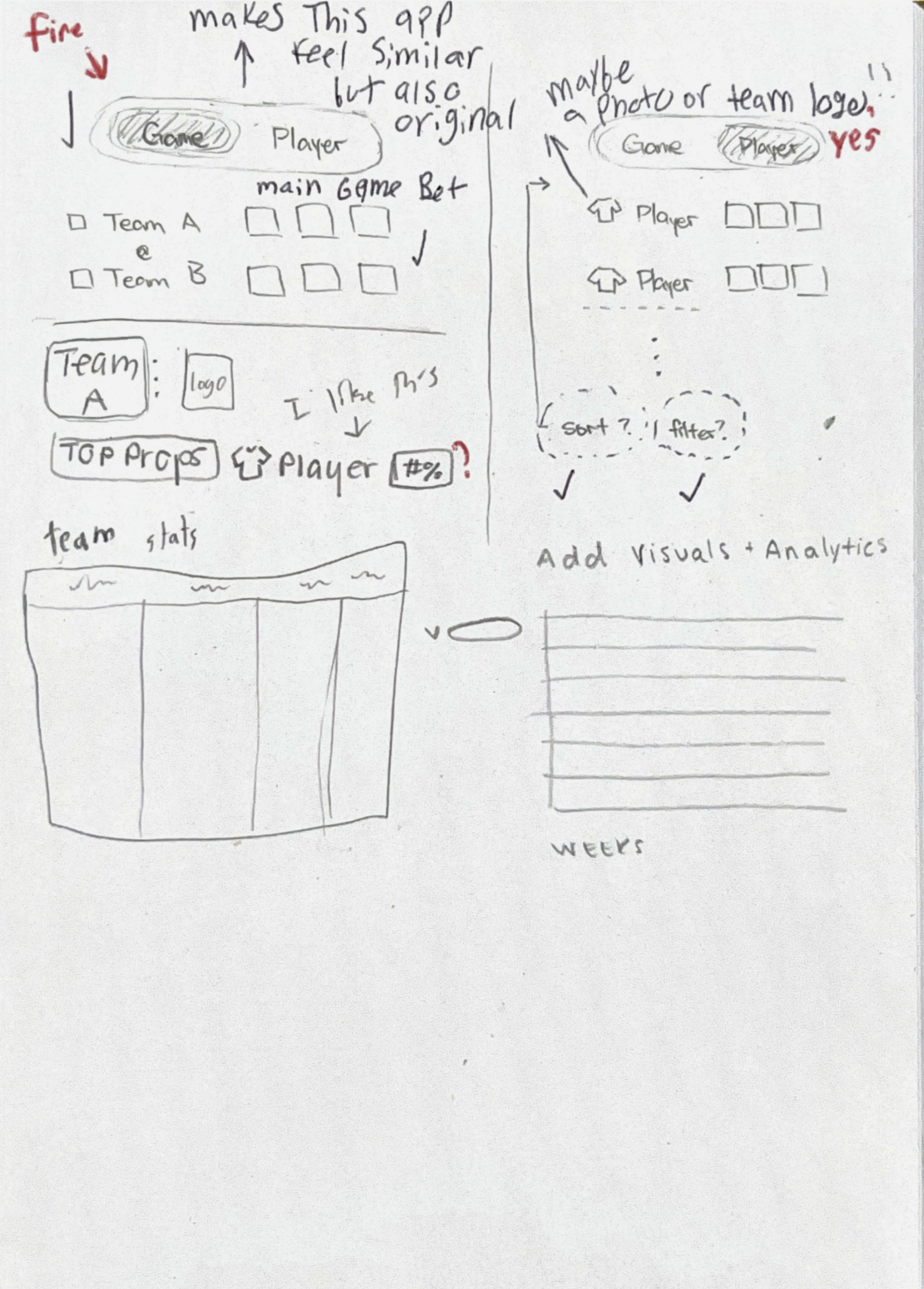
Round Robin Sketching
Method Sketching ideas and iterating to encourage diverse, collaborative ideation
Low-Fidelity Prototyping on Figma
Game Betting
Non-Toggle
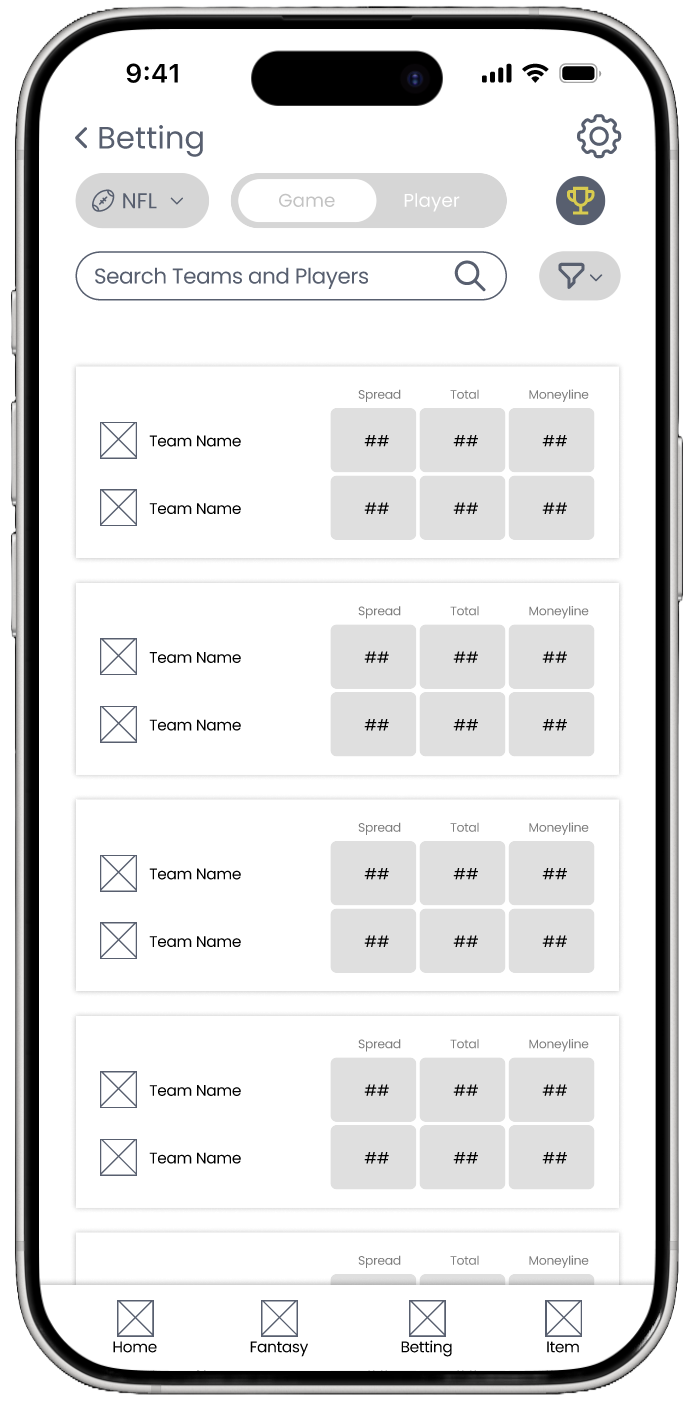
Game Betting (v1)
Game Details
ABC Testing
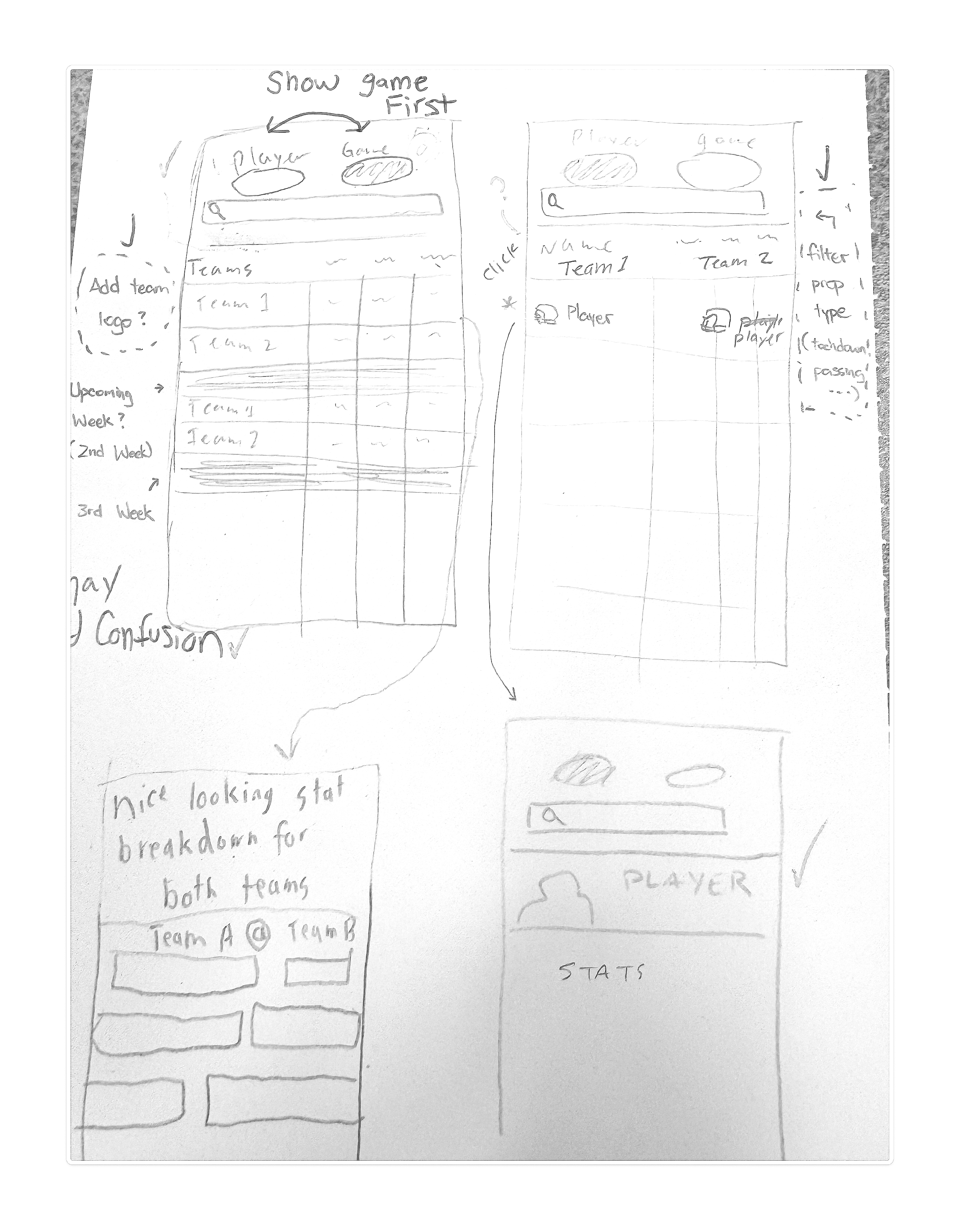
Toggle
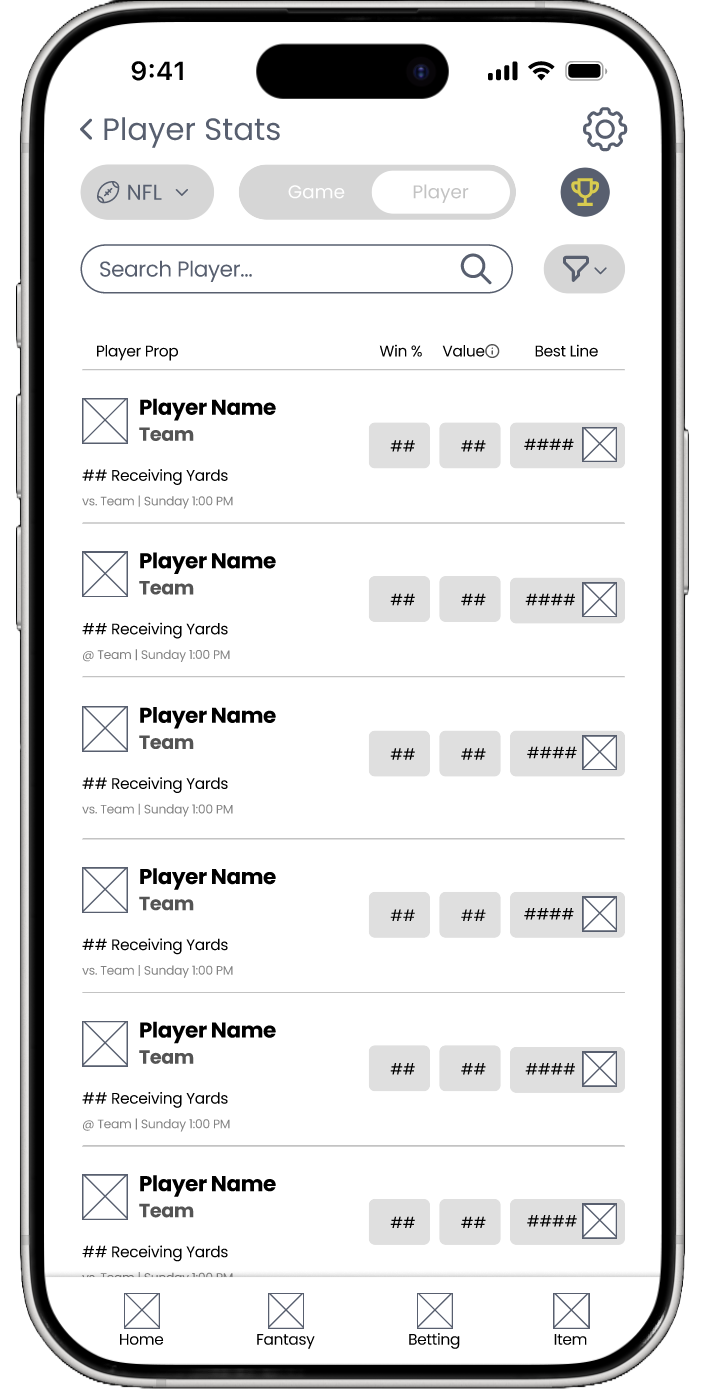
Player Prop
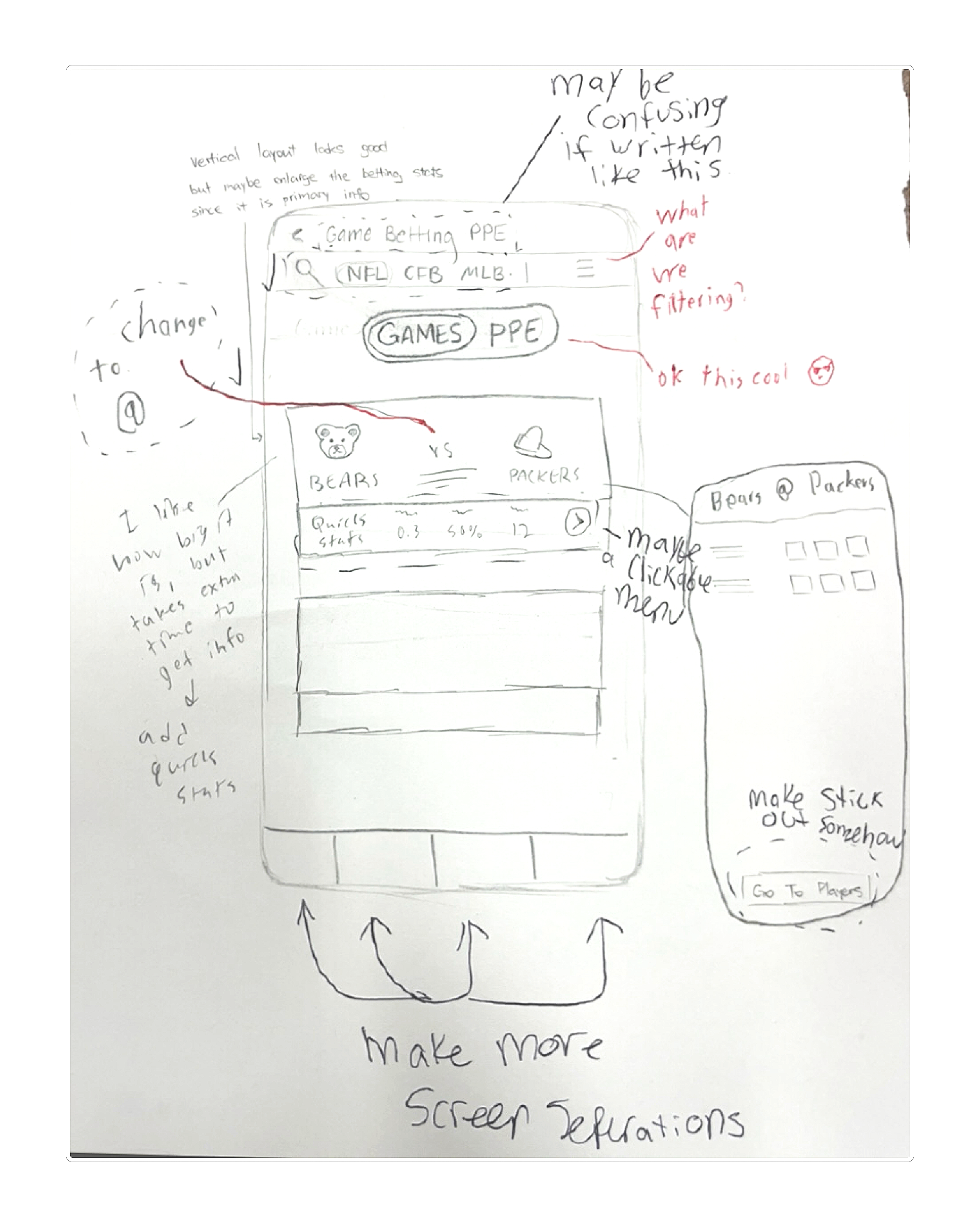
We performed ABC testing to compare all three versions of our Low-fidelity prototypes and to gather feedback from different testers to inform more design decisions for when comparing a Vertical vs. Horizontal layout.
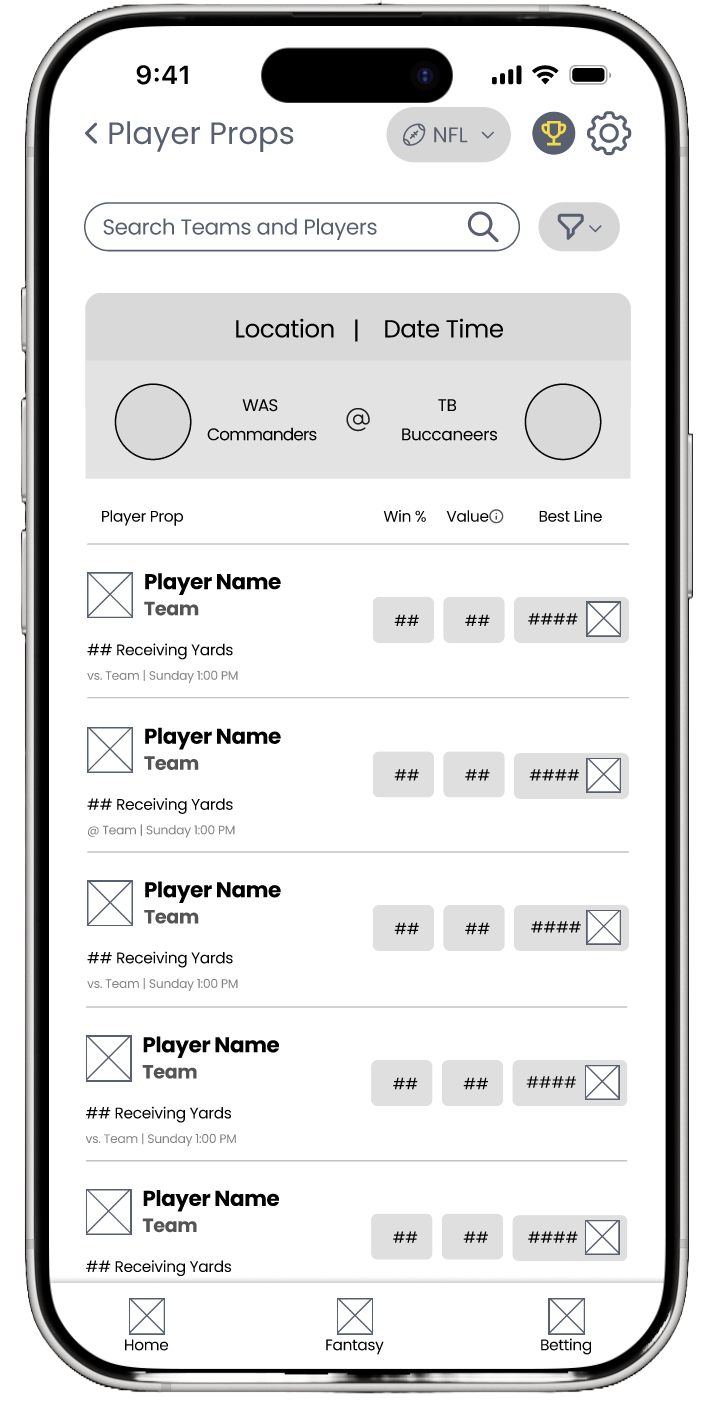
Inner Player Prop (v1)
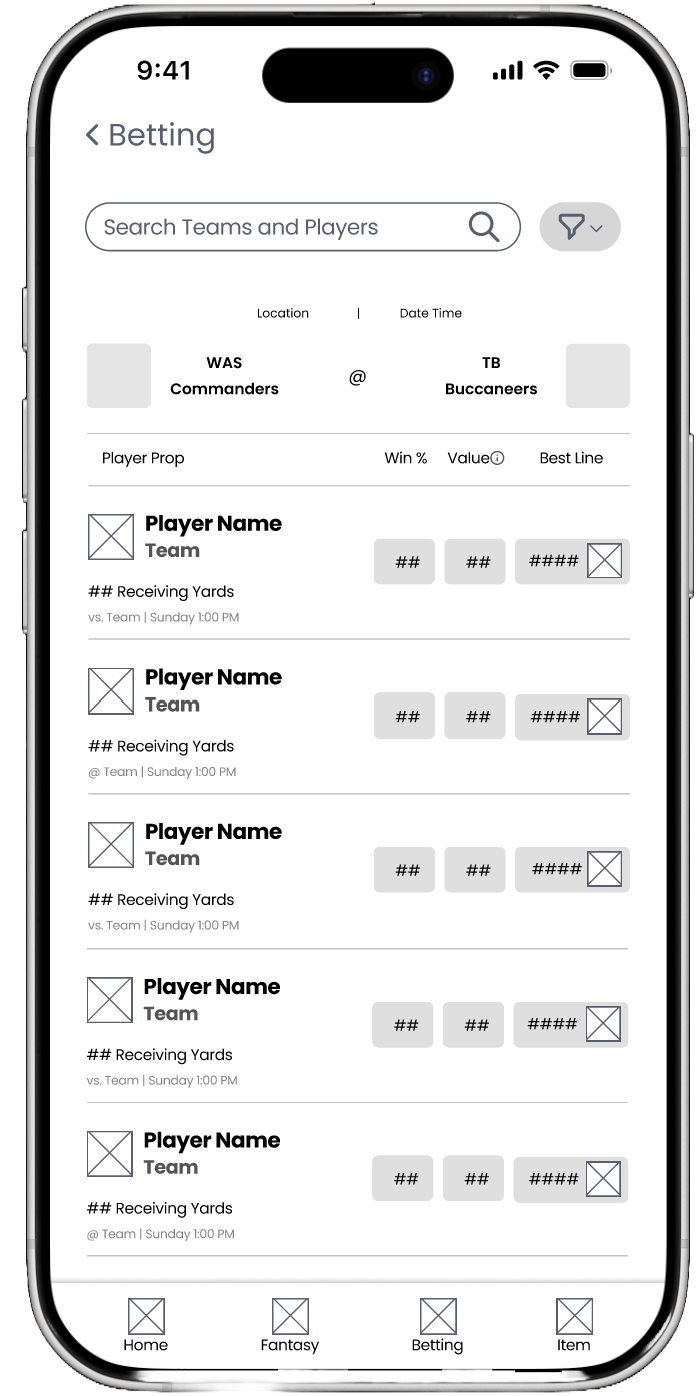
Inner Player Prop (v2)
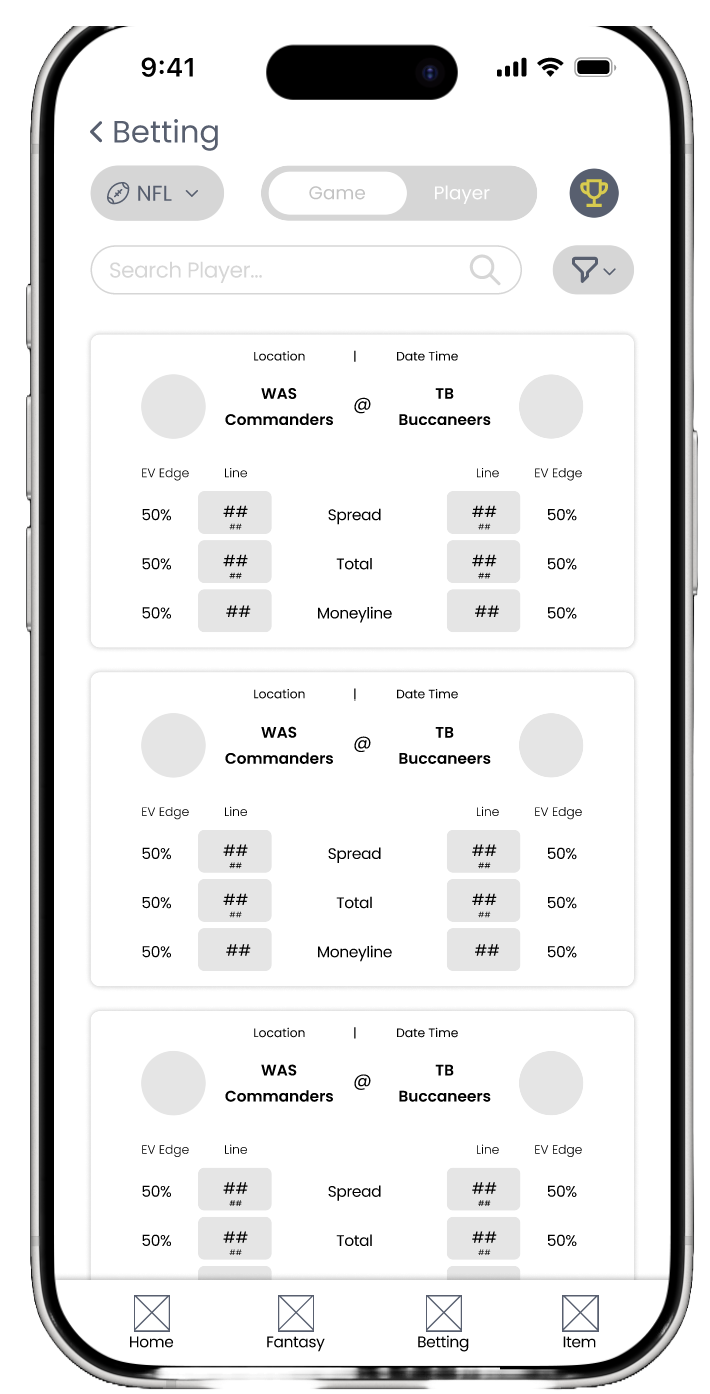
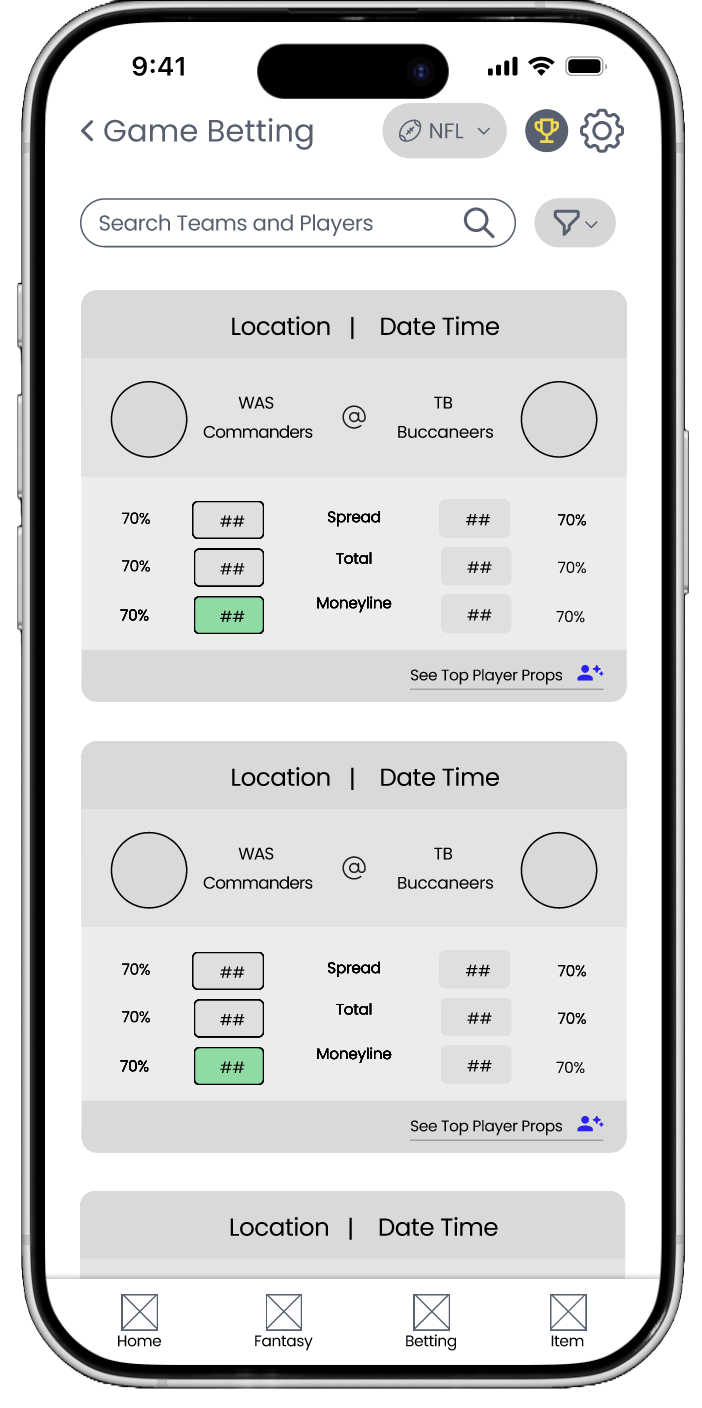
Game Betting (v2)
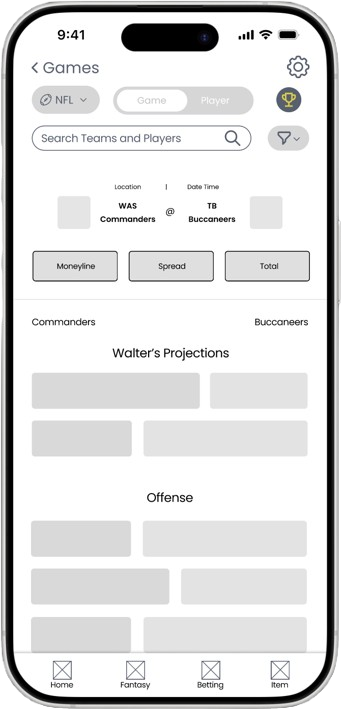
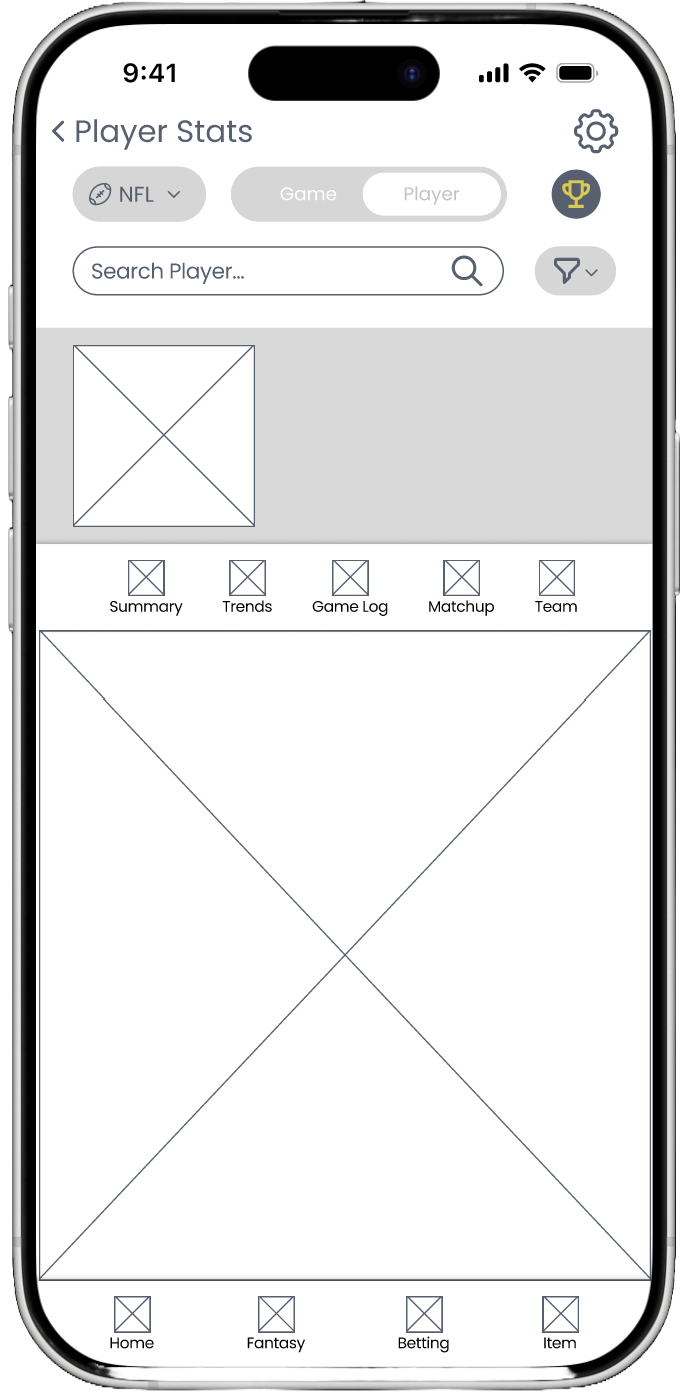
Player Details
Concept Testing
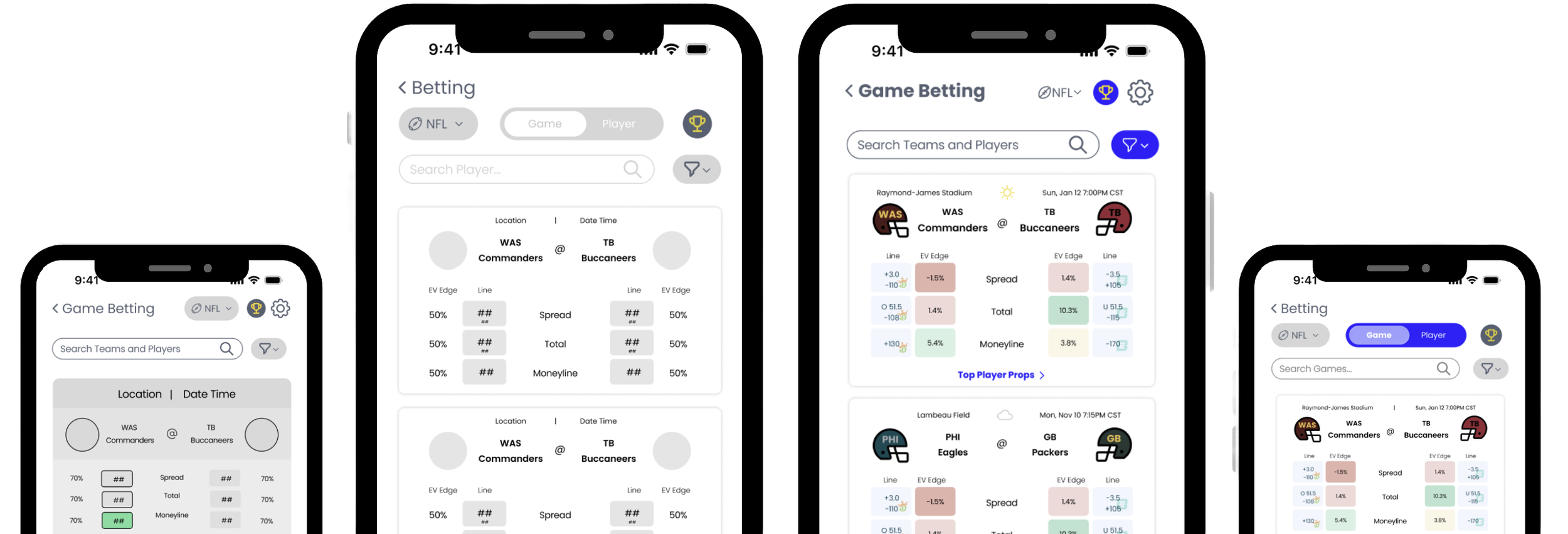
We tested users’ preference over the toggle and non-toggle variations of the game betting & player prop low-fi screens we developed, in terms of their comprehension of navigation and visual appeal.
Participants favored both variations. Some favored the toggle design for its ability to ‘elevate the app’ and reduce visual clutter, however, others found the non-toggle design more intuitive because it allowed for seamless workflow between game bets & player props without further ‘clicks.’
Remote Concept Testing
a.
b.
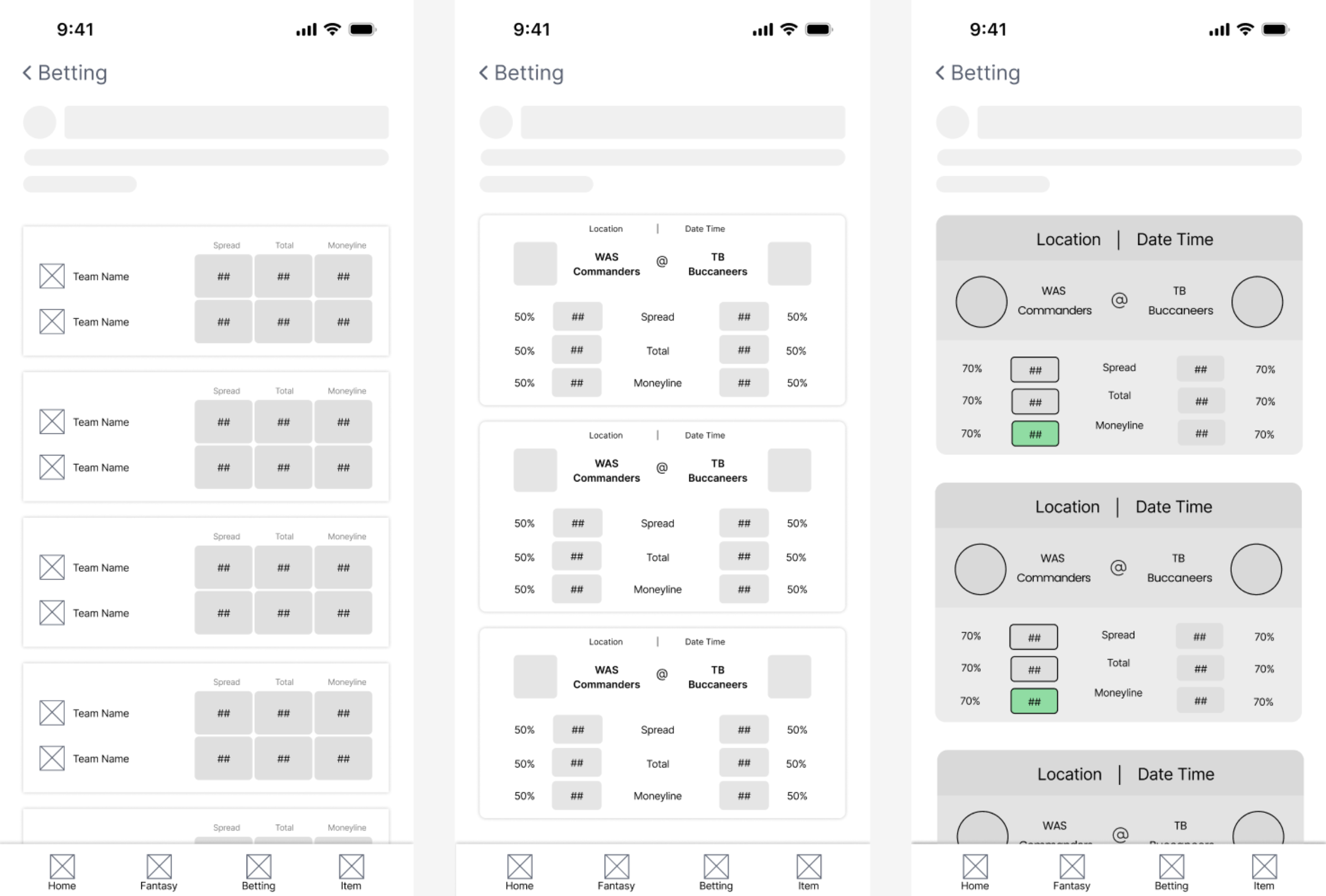
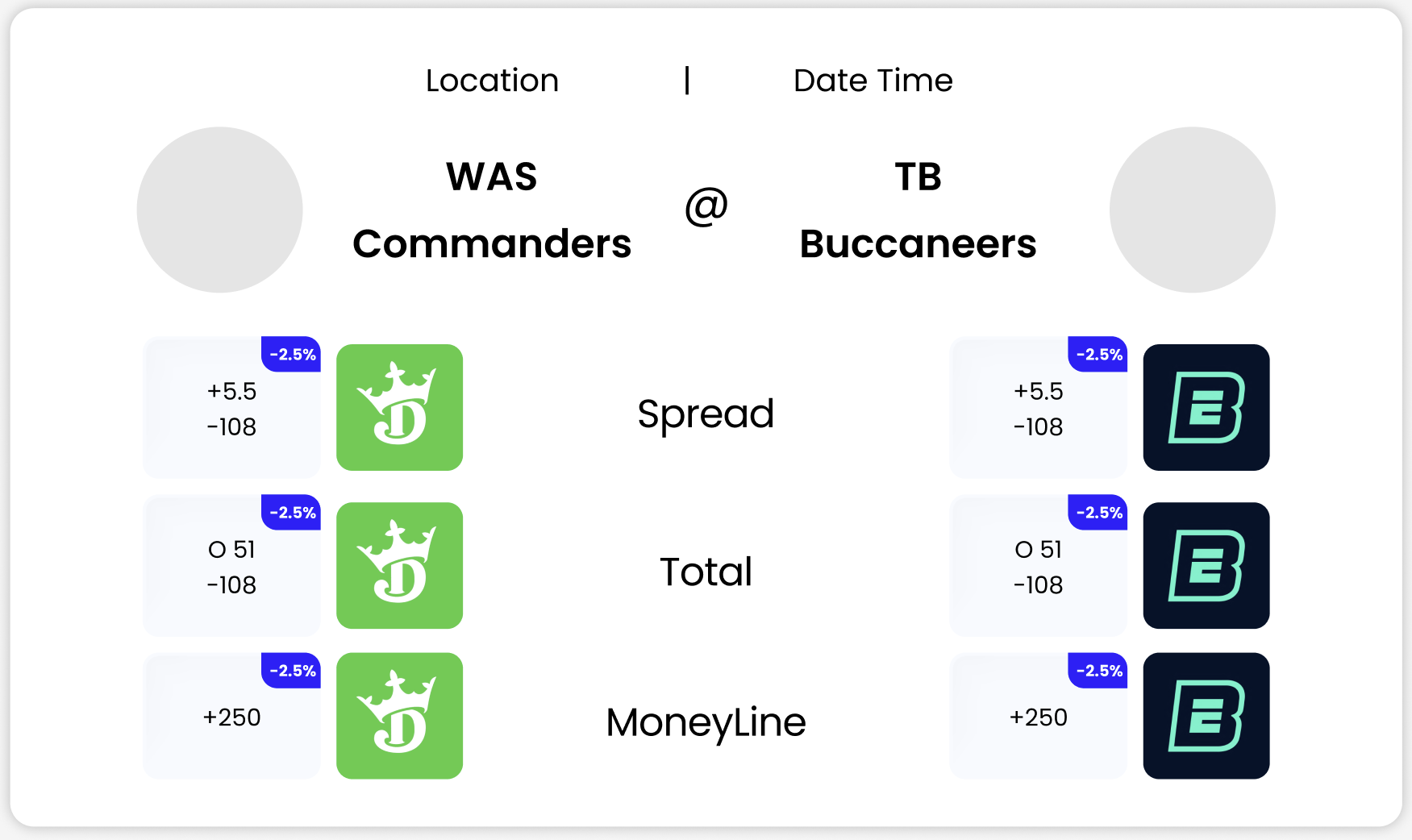
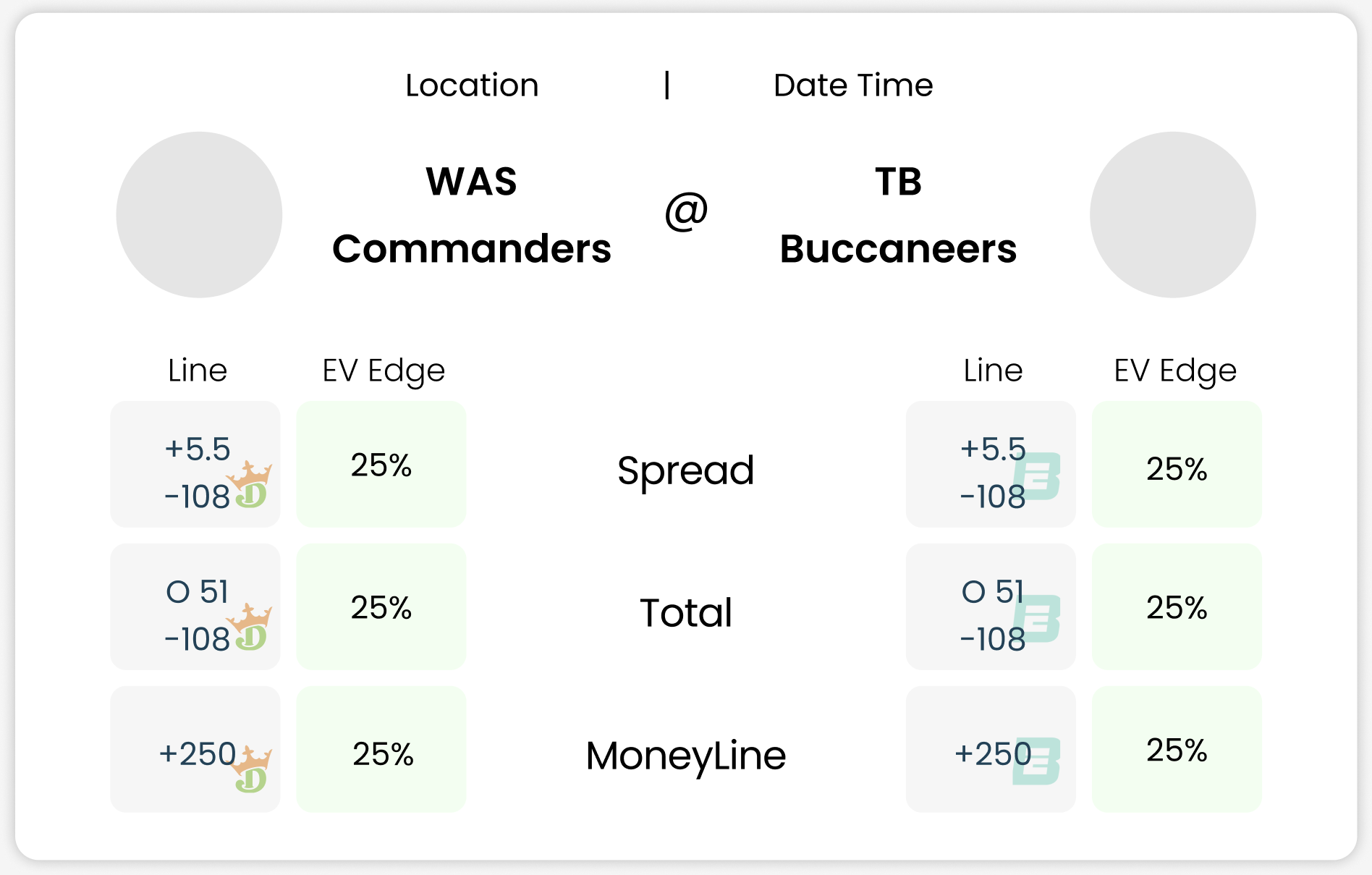
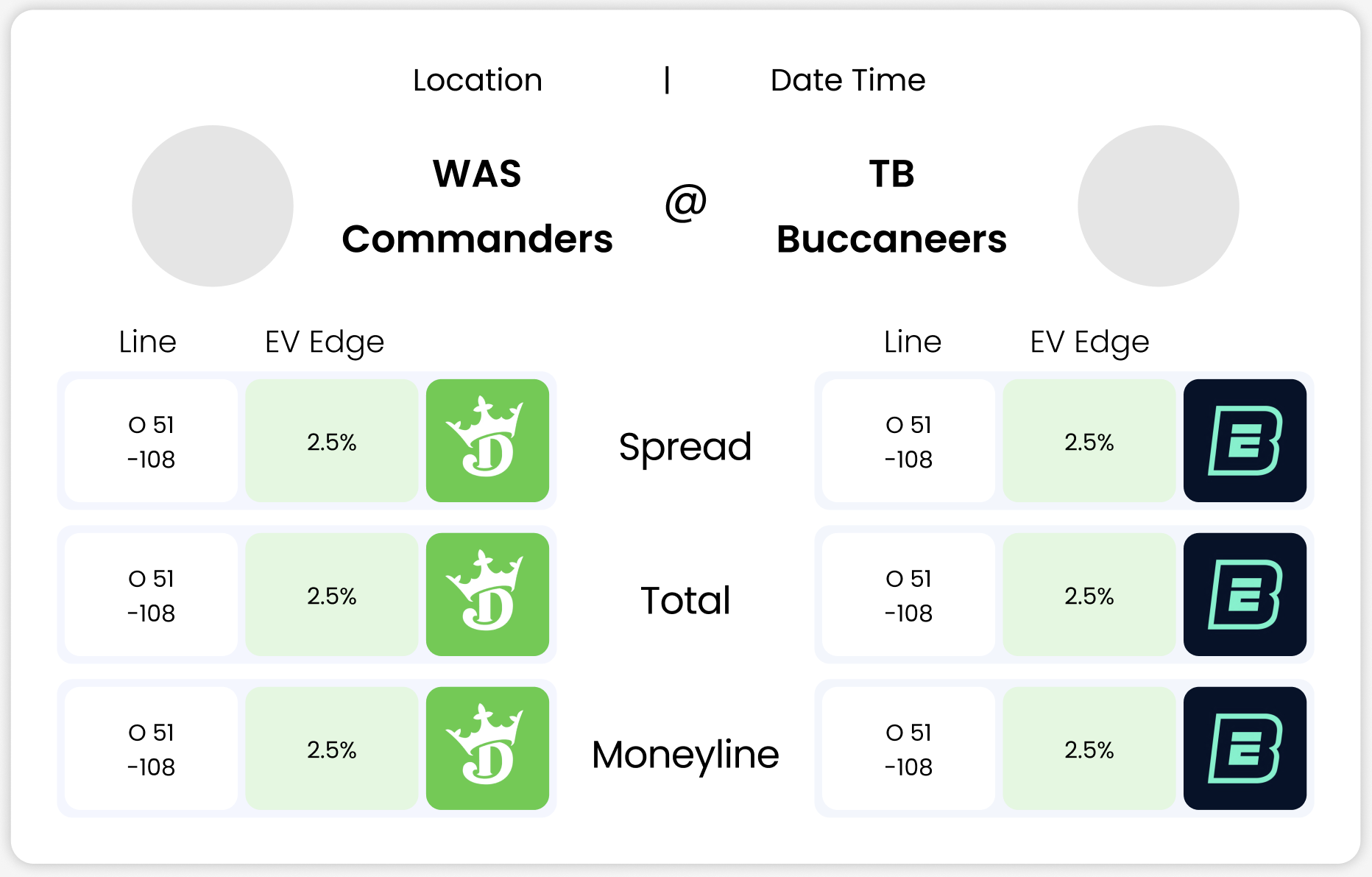
We conducted a remote concept test survey consisting of different variations of line & team matchup displays in game bets. We gathered feedback on participants’ preferences along with their qualitative reasoning and quantitative ratings of how comprehensive each variation was.
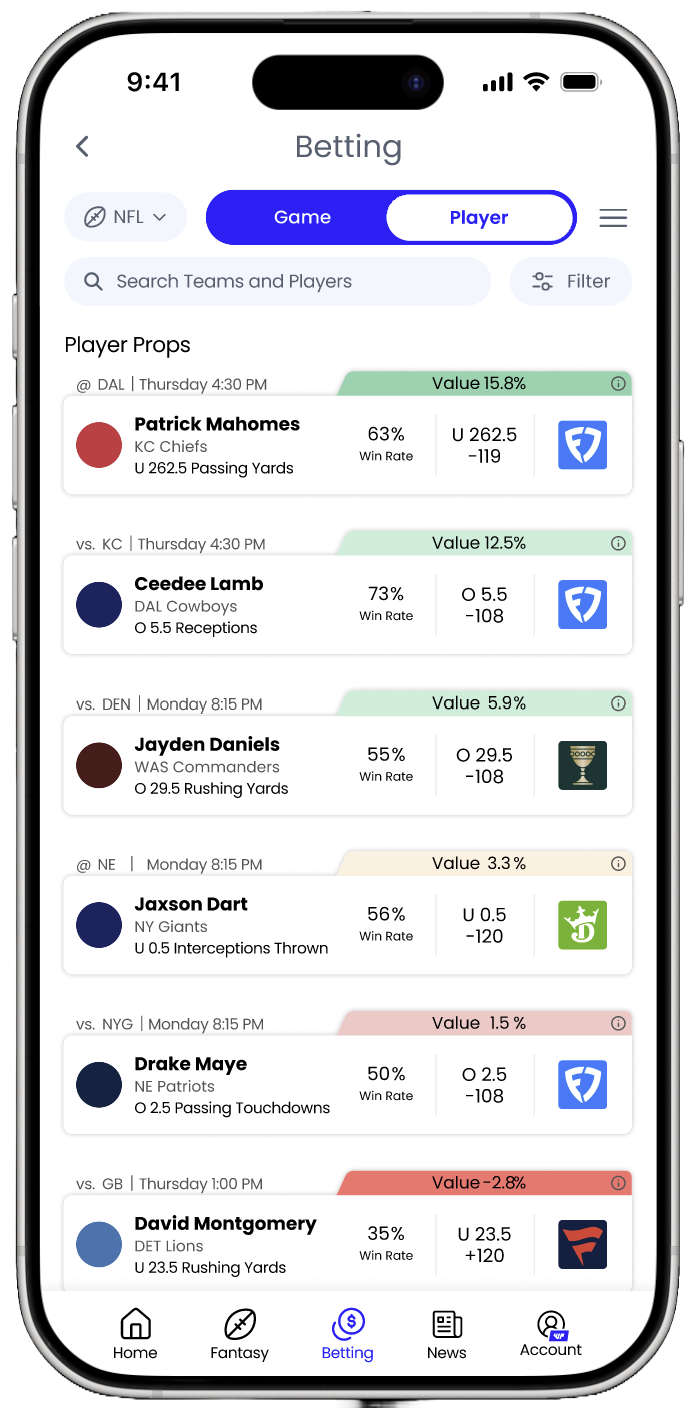
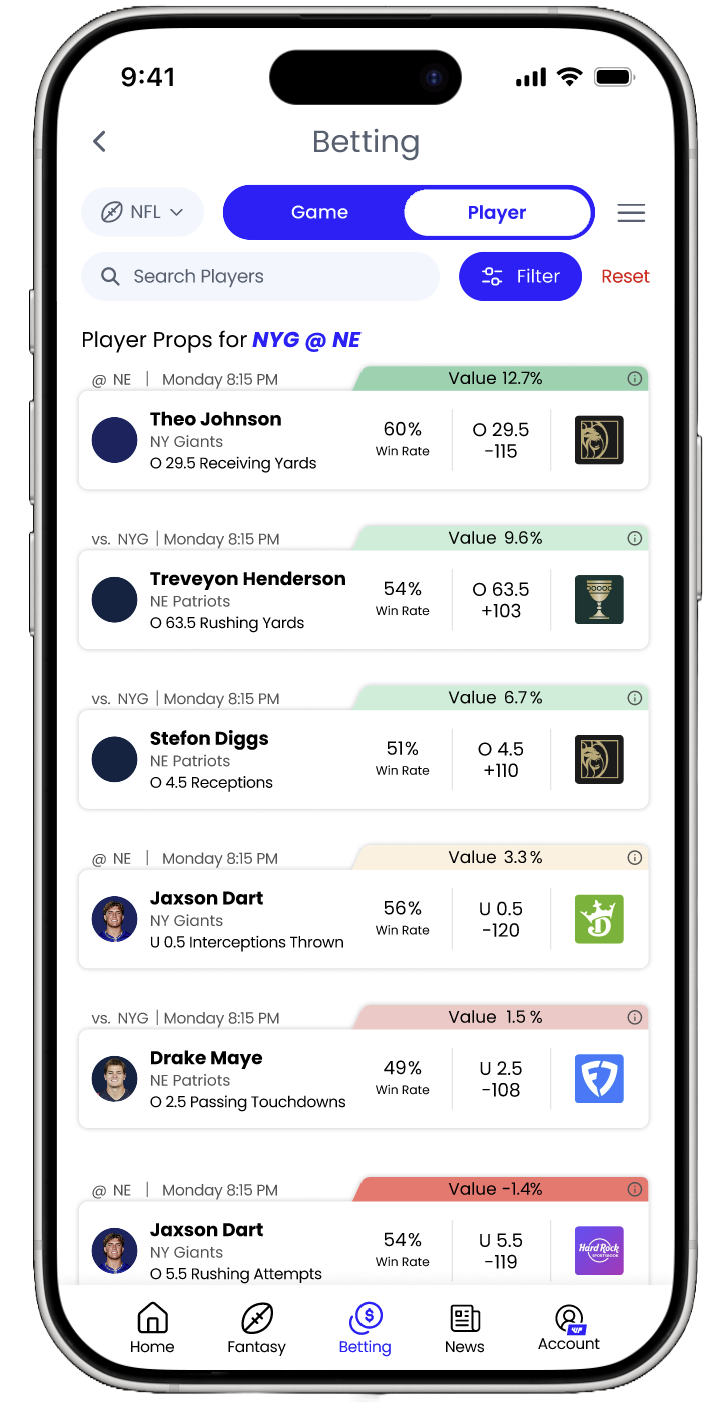
Hi-Fidelity Static Prototype on Figma
c.
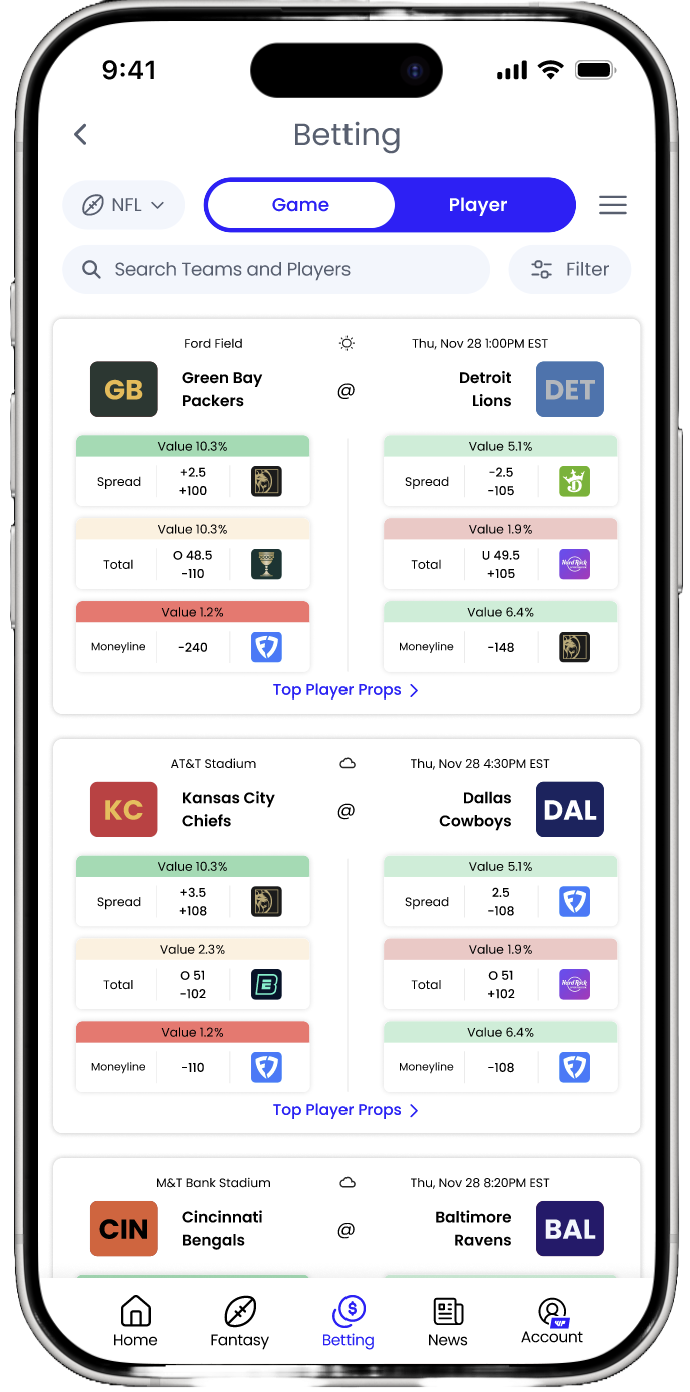
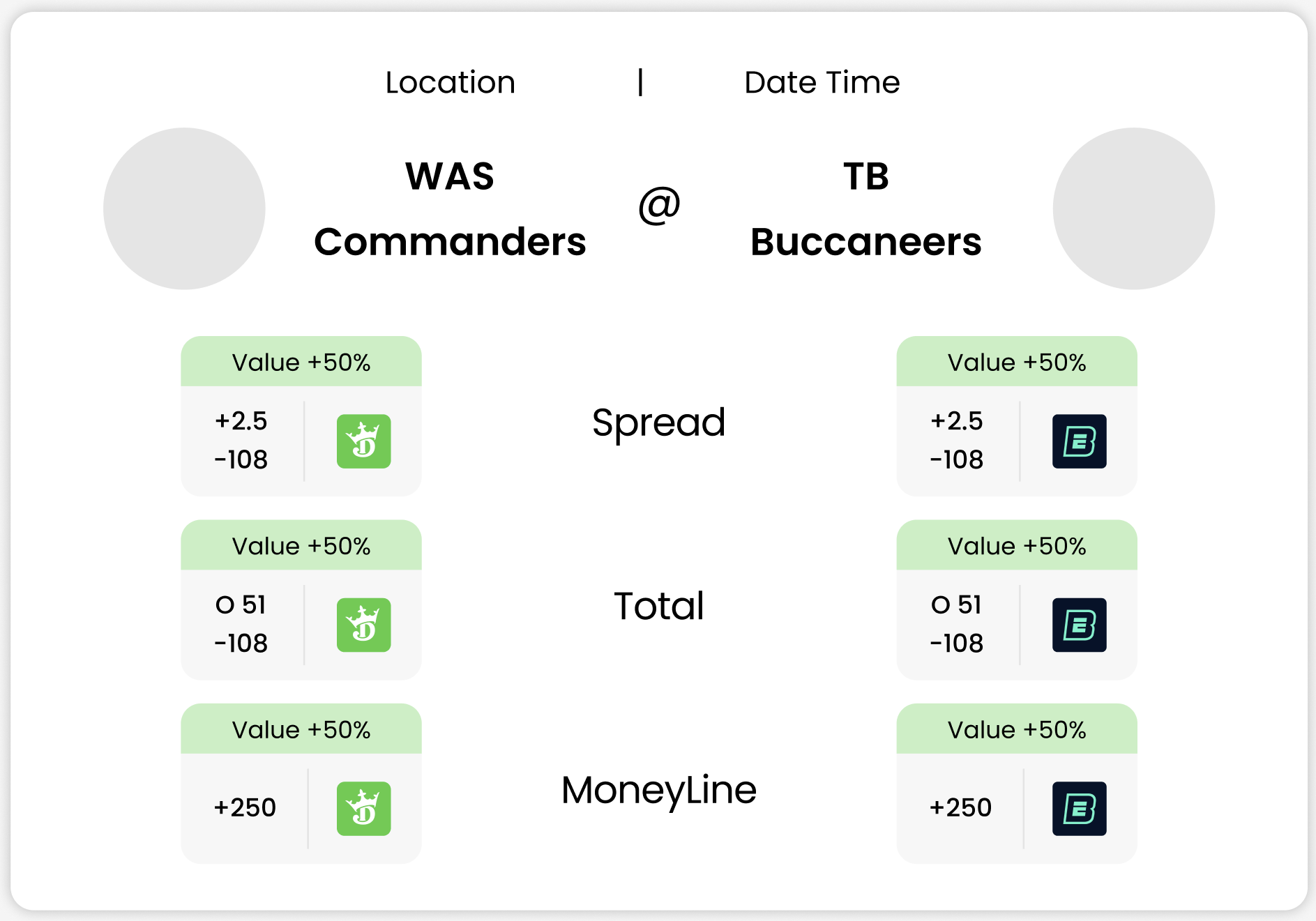
Concept testing conveyed a clear user preference for variation d, which received the highest ratings for ‘ease of understanding.’
d.