Johns Hopkins APL

Role
UX Research
SPONSOR
johns hopkins applied physics lab
Project type
speculative research
Project Overview
An Exploratory Research project exploring the future integration of autonomous vehicles on college campuses conducted at Purdue University in collaboration with Johns Hopkins Applied Physics Laboratory (APL).
How might we support perceptions of safety and decision-making of campus road users in an autonomous future?
deliverables
Ecosystem Map, Low-to-Mid-Fidelity Prototype — ideal AV of 2040, Design Fiction Vignette, Phased Implementation Roadmap
The Process
Exploring the Current State of Autonomous Vehicles (AVs)
methods
literature review touching on human-av interaction, road safety perception, familiarity, & trust
desk review of forums & social media posts regarding av interactions, accessibility, and further perception


safety
fear of malfunctions in autonomation
concerns for road safety

design
distinguishable look
advanced driver assistance systems
(ADAS)

trust
increase familiarity to combat algorithmic aversion
offer user autonomy

suggestions
Educate technology perfromance & accuracy
Mandate usability testing


System Status Indication
limited feedback/indication of ADS

detection methods
cameras & radars
end-end networks
sensor fusion

vehicle interactions
intentional disruption of avs
lack of external communication

accessibility
lack of accommodation for disabled users
methods
comaprative analysis of av competitors to create a comprehensive list of important safety features & design systems
subject matter expert interviews with 11 representatives from the av industry to gain professional insight on the current state & future of avs

comparative analysis

Subject Matter Expert Interviews
We Compared…




“Reduction of private ownership is in everybody’s favor... the world will be safer, environmentally too, especially with fewer vehicles on the road.”
— Satvir Singh, Director of Product Safety at MayMobility
“As humans we’ve learned to pick up on little things and react accordingly, which autonomy might not be able to pick up on these nuances.”
— Lexi Basantis, Human Centered Design Strategist at JHU APL

design & programming
End-to-end network architectures
Clear external communication via projected signals or auditory alerts
suv strucutre
infrastructure
Repurposing parking spaces

policy recommendations
Dedicated AV lanes in high-traffic areas to enhance efficiency and safety
Advanced detection and prediction models

private vs public use
Implementation of publicly-owned AVs to reduce the need for privately-owned vehicles
emphasis on public transporation & accessibility
Identifying Gaps in Exsiting State Policies
method
secondary research on existing autonomous vehicle legislations across states with varying levels of AV maturity

arizona

california

indiana


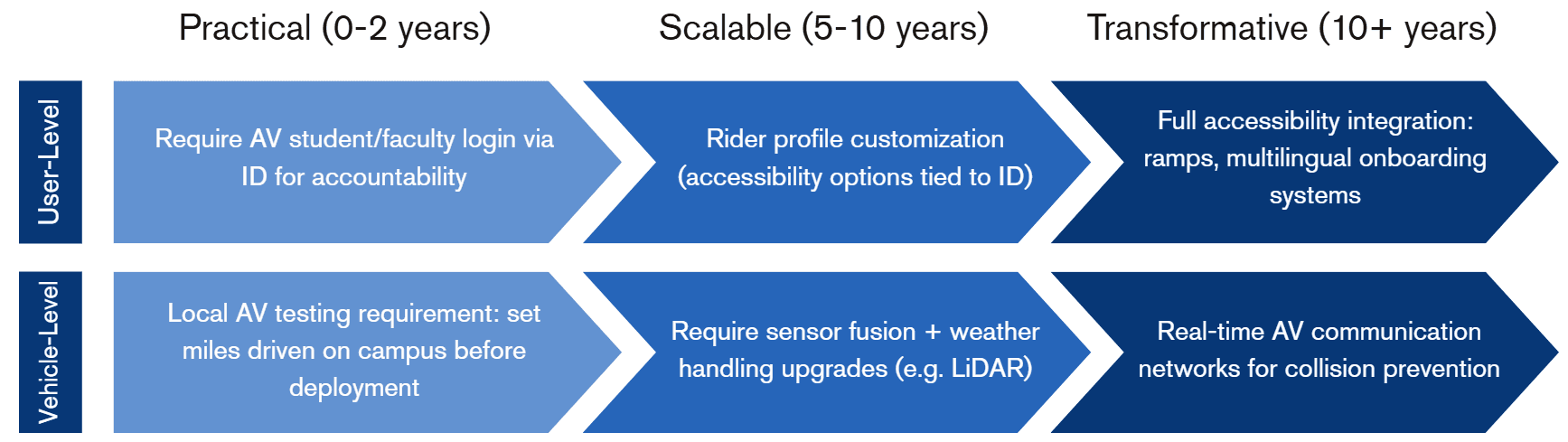
Policy Gaps & Phases for Improvement
we created a scale of implementation, assessing whether policies could be envisioned as practical, scalable, or transformative

av testing on public roads
accessibility
on-campus av certification
lIdar & weather requirements
libarility in av-only crashes
av/time-zone signage
Policy Area Analysis Measuring:
Defining & Understanding Interactions of the Campus Ecosystem
User Survey
User Interviews
Observations

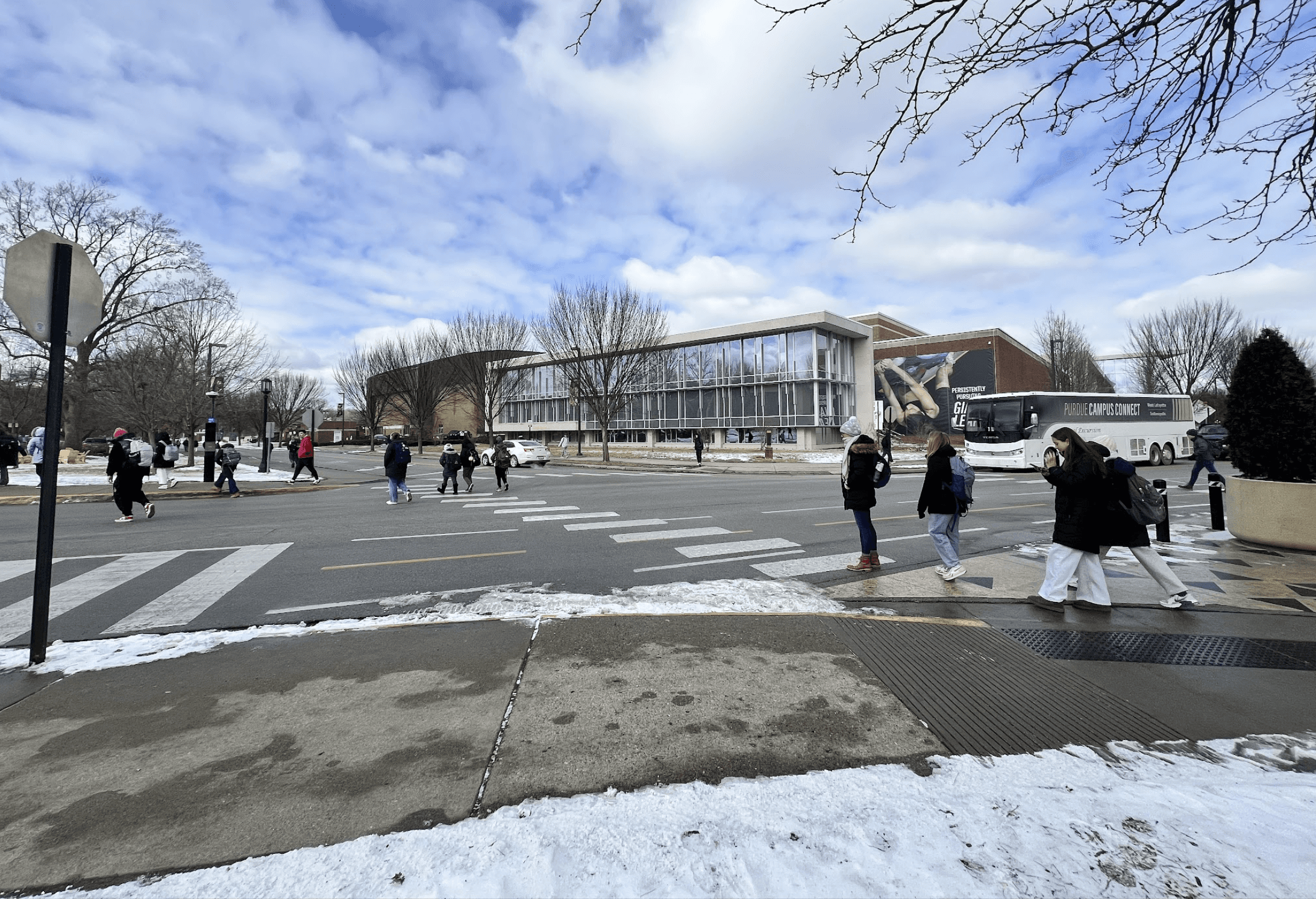
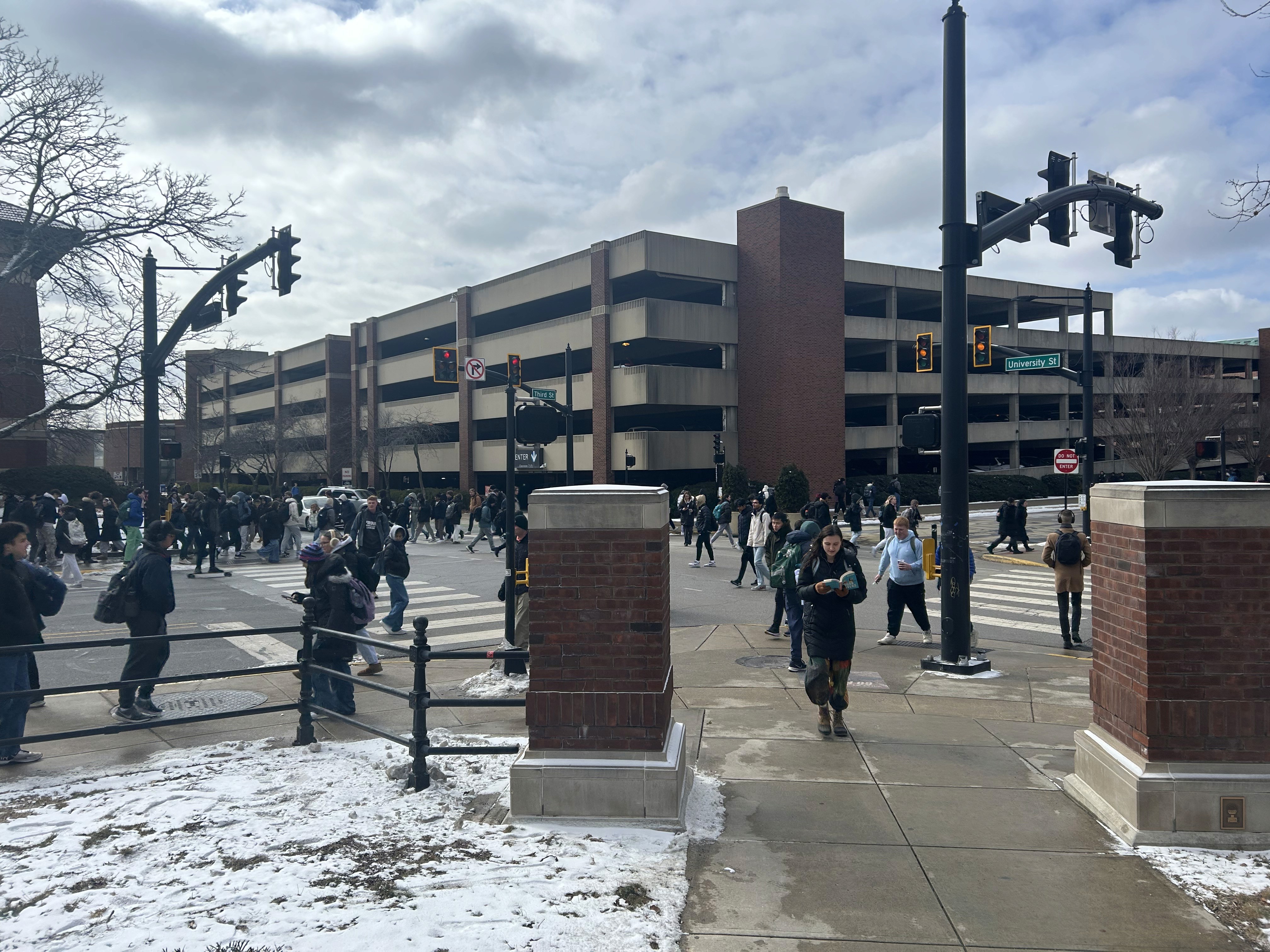

Non-Vehicle Road Users on Campus
Non-Vehicle Road Users on Campus
trafficed intersections on campus
“It’s like seeing a car from the 50s. You’re curious on the outside but you’re concerned about how long it can last.”
— Interviewee
“I’m concerned about its capability to react, but inability to predict what a pedestrian can do. People driving a car are able to have better pattern recognition.”
— interviewee
Showcasing the Future of Autonomous Vehicles on College Campuses
01 Policy Recommendations
02 AV Prototypes
03 Design Fiction Vignette

AV Interior
AV Exterior
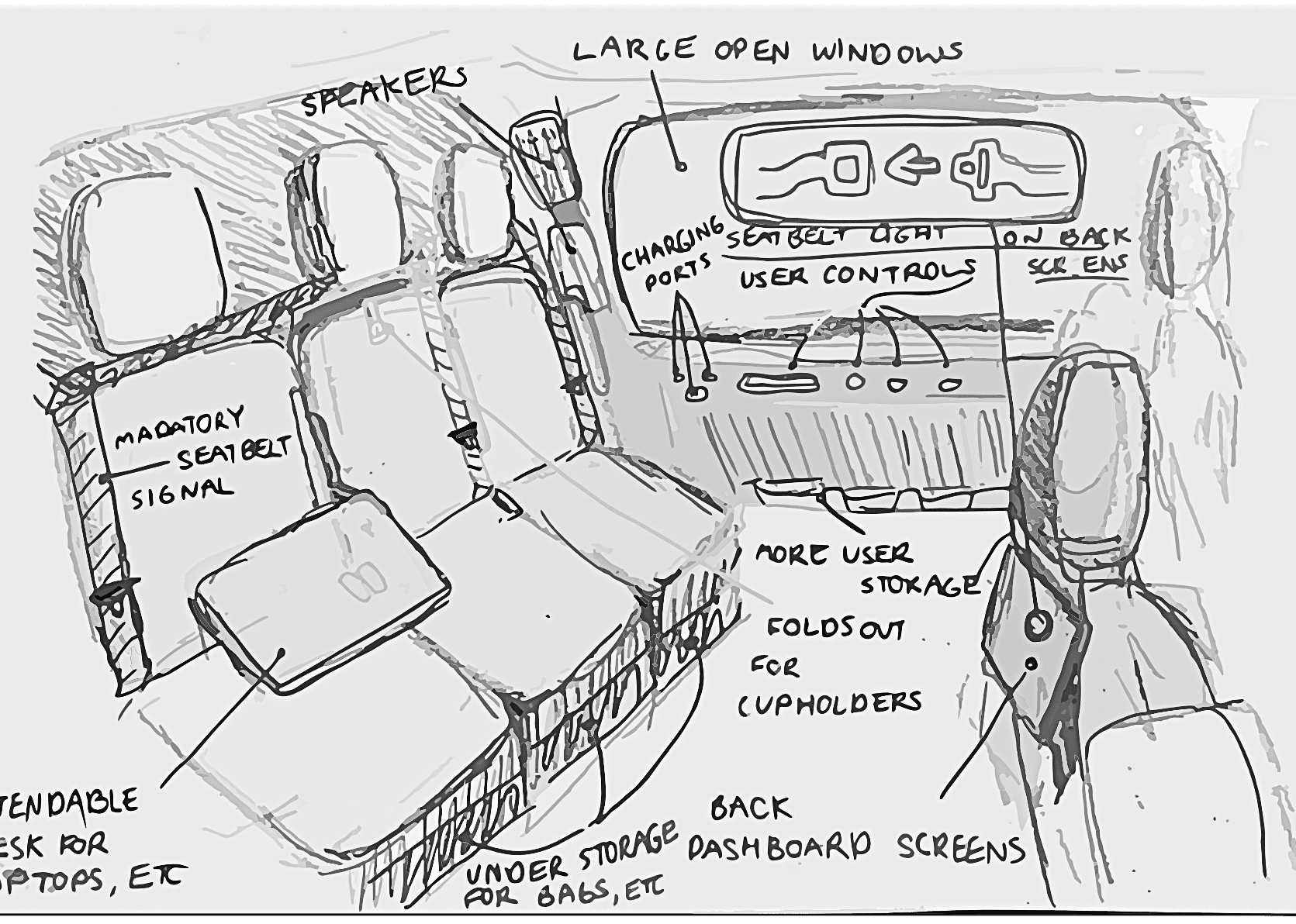


Ideation to Shape Our Designs

Prototyped Results
AV Exterior
AV Interior
AV Passenger Interface

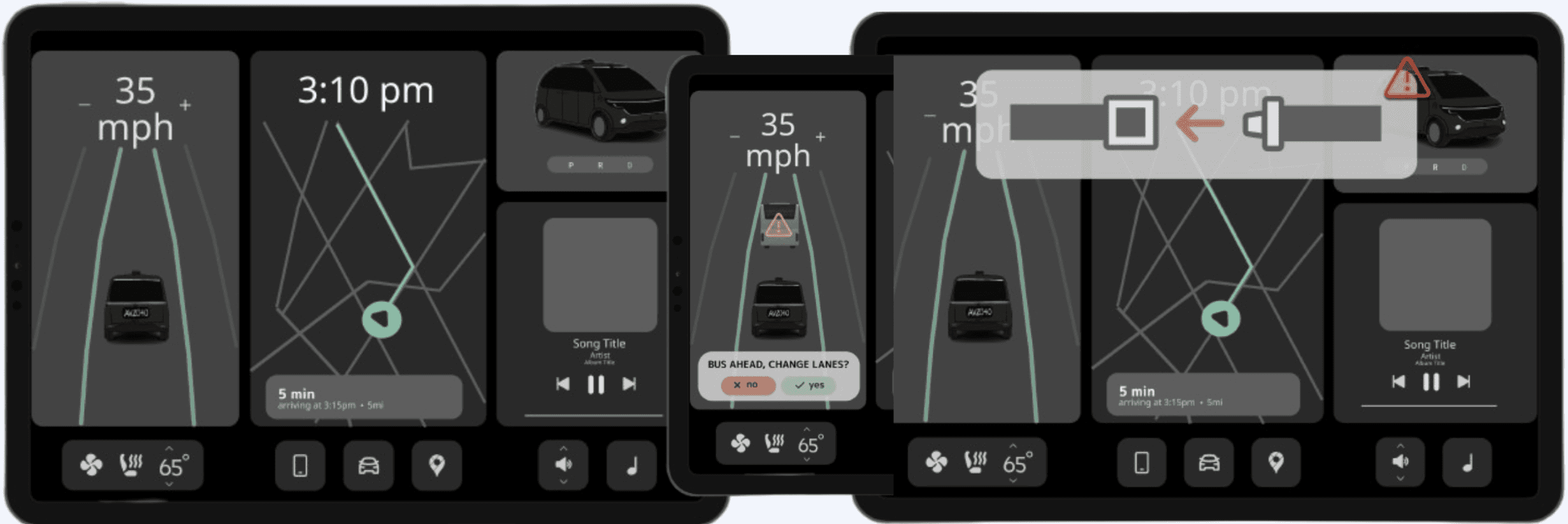
Key Features:
Key Features:
Turquoise Headlights
Front & Back Bumper Screen
Projected Crossing Signals
360 LED Signaling Lighting System
Exterior Speakers
360 Camera & LiDAR System
Removal of Side-View Mirrors
SUV Model
Ramp for Wheelchair/Stroller Access
Tinted Windows
Key Features:
Removal of Steering Wheel
Rearranged Seating
Foldable/Extendable Tables
Head-Level Speakers
Haptic Feedback Installation
Full-Size Heads Up Display (HUD) on Windshield
Center Stack Display
Lights to Indicate ADAS/AVA Activation
Camera Monitor
Interactive Touchscreen Display
Display of Alerts, Hazards, & Suggestions
Customization Comfort & Media Controls
Navigation Map Presenting Destination & estimated Time of Arrival
Constant Display of AV’s Environment & Decision Process